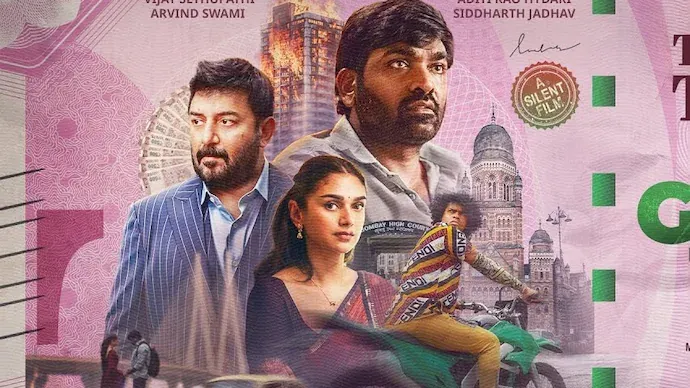
Gandhi Talks arrives as a rare and audacious cinematic work, redefining storytelling through near-complete silence. The film abandons conventional dialogue to rely on visual grammar, performance nuance and sound design, offering audiences an experience that is both meditative and challenging. Positioned against the backdrop of a fast-paced, dialogue-heavy film industry, Gandhi Talks stands out as a creative risk that privileges form over formula. Early critical response suggests that while the film may not cater to mass-market tastes, it succeeds as an artistic statement, reaffirming the viability of experimental cinema in an era increasingly driven by content diversity.
A Film That Defies Convention
At its core, Gandhi Talks is an exercise in restraint. The narrative unfolds with minimal spoken words, compelling viewers to engage deeply with body language, framing and silence itself. This approach places the film in a niche category rarely explored in mainstream Indian cinema.
By rejecting traditional exposition, the film demands patience and attentiveness, positioning the audience as an active participant rather than a passive consumer.
Performances Carry the Narrative Weight
In the absence of dialogue, performances become the primary storytelling tool. The cast delivers controlled, understated portrayals that rely heavily on facial expression and physical movement.
Critics note that this form of acting requires precision and discipline, as even minor gestures carry narrative significance. The performances largely succeed in sustaining emotional continuity, preventing the silence from feeling empty or indulgent.
Technical Craft and Visual Language
From a technical standpoint, Gandhi Talks demonstrates strong command over visual composition and sound design. Cinematography plays a decisive role, using light, shadow and spatial framing to convey shifts in mood and meaning.
The restrained use of background sound and ambient noise replaces dialogue as the emotional cue, reinforcing the film’s thematic focus on introspection and unspoken conflict.
Market Positioning and Audience Reception
From a business perspective, Gandhi Talks is clearly not designed as a commercial blockbuster. Instead, it aligns with:
- Festival and cinephile audiences
- Viewers drawn to experimental and minimalist cinema
- Platforms and circuits that value artistic credibility over box office scale
Such films often gain traction through critical acclaim and word-of-mouth rather than opening-weekend metrics, reflecting a long-tail consumption model.
A Statement on Creative Risk-Taking
The release of Gandhi Talks underscores a broader shift within the film ecosystem, where smaller, idea-driven projects are finding space alongside commercial spectacles. For filmmakers, the project signals that innovation remains possible—even necessary—within a crowded content marketplace.
Industry analysts view such films as essential to cultural capital, enriching the cinematic landscape even when financial returns are modest.
Conclusion
Gandhi Talks is not a film that seeks universal appeal. Instead, it offers a distinctive, contemplative experience that challenges audiences to listen to silence and read between frames. As a cinematic experiment, it largely succeeds, reaffirming that storytelling need not always be loud to be impactful. In doing so, the film carves out a meaningful space for minimalist cinema in an industry often dominated by excess.
Comments