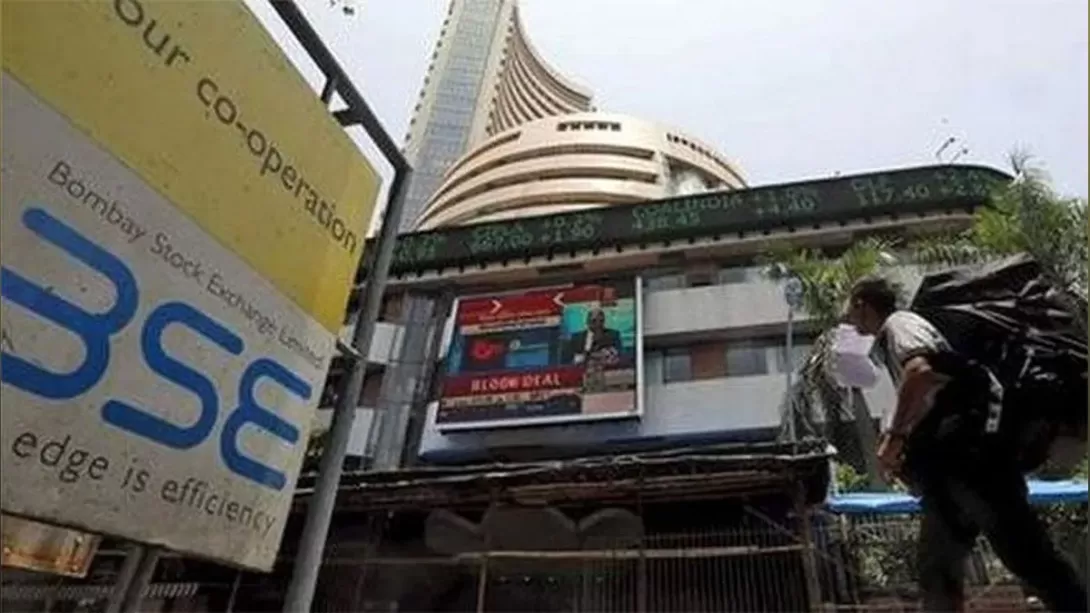
In a volatile trading session on Tuesday, India's equity benchmarks, the Sensex and Nifty, saw modest gains despite investor caution fueled by geopolitical tensions. The Sensex edged higher by 0.09%, while the Nifty closed up by just 0.03%. The markets were supported by strong buying in blue-chip stocks such as Reliance Industries, Infosys, and Tata Consultancy Services, along with robust foreign institutional investor (FII) inflows. However, mixed quarterly earnings results and concerns over economic projections led to a somewhat cautious market sentiment. Global indices also posted mixed results, reflecting uncertainty in international markets.
Market Overview: Modest Gains Amid Market Volatility
The Indian equity market experienced a range-bound session on Tuesday, with the Sensex and Nifty indices settling marginally higher. Despite initial volatility due to geopolitical tensions, both indices were able to maintain small positive gains, aided by continued support from Foreign Institutional Investors (FIIs) and robust buying activity in select blue-chip stocks.
The Sensex, which tracks the performance of 30 major stocks, ended the day up by 70.01 points, or 0.09%, at 80,288.38. The Nifty, which includes 50 stocks, closed slightly higher by 7.45 points, or 0.03%, at 24,335.95. At one point during the session, the Sensex gained as much as 442.94 points or 0.55%, reaching a high of 80,661.31 before retreating into a narrow range by the close.
Sectoral Performance: Blue-Chip Stocks Drive Market Growth
The market was buoyed by strong performances from major companies in the information technology and energy sectors. Reliance Industries, Tata Consultancy Services (TCS), Infosys, and HCL Tech were among the top performers on the Sensex, contributing significantly to the index’s gains. These blue-chip stocks, driven by solid fundamentals and investor confidence, helped offset the downward pressure from sectors such as cement and pharmaceuticals.
On the flip side, stocks such as UltraTech Cement, Sun Pharma, Power Grid, and NTPC faced headwinds, weighing down on the broader market sentiment. These companies are traditionally seen as defensive stocks, but recent results and ongoing sectoral challenges led to cautious investor behavior.
Foreign Institutional Investors (FII) and Global Market Impact
One of the key drivers supporting the Indian equity market has been the continued inflow of foreign capital. On Monday, FIIs purchased equities worth Rs 2,474.10 crore, which provided a cushion for the market. This consistent foreign buying has been a critical factor preventing the market from slipping further, particularly amid concerns stemming from geopolitical events and global economic uncertainty.
Global markets showed mixed performances, reflecting broader market sentiment. While South Korea’s Kospi index and Hong Kong’s Hang Seng ended in positive territory, the Shanghai SSE Composite index closed marginally lower. In the U.S., markets ended mostly higher, reflecting resilience in key sectors despite ongoing challenges in some global regions.
Economic Indicators and Market Sentiment
Domestic economic data also contributed to the cautious sentiment in the market. India’s industrial production growth for March came in at just 3%, a slowdown compared to the 5.5% growth recorded in the same month the previous year. The decline was primarily attributed to a weak performance in the manufacturing, mining, and power sectors. While the overall industrial growth figure remains positive, the slowdown raised concerns over the broader health of the economy, leading some investors to temper their expectations for future growth.
In global commodities, oil prices saw a slight decline, with Brent crude falling by 1.59% to USD 64.81 per barrel. This drop may provide some relief to oil-importing nations like India, although the long-term impact of fluctuating global oil prices on inflation and consumer spending remains a key concern.
Looking Ahead: Geopolitical Tensions and Earnings Impact
While the domestic market managed to stay positive in Tuesday’s session, concerns about geopolitical tensions, particularly those involving border disputes, continued to cast a shadow over investor sentiment. As geopolitical risks remain a critical factor, investors are likely to remain cautious, especially as earnings season unfolds and companies report mixed quarterly results.
Analysts have raised concerns that downward revisions in earnings projections for FY26 could lead to further volatility, particularly if the geopolitical environment worsens or if inflationary pressures start to impact consumption. The market may continue to experience range-bound movements as it navigates these uncertainties.
Conclusion: A Stabilized Market Amid Global and Domestic Concerns
Overall, the Indian equity market closed with marginal gains, buoyed by sustained foreign inflows and strong performances from blue-chip stocks, but tempered by cautious investor sentiment due to geopolitical risks and slowing industrial production. As geopolitical tensions persist and quarterly earnings remain mixed, market participants will likely adopt a wait-and-see approach, keeping a close eye on global developments and domestic economic indicators. The outlook for the equity markets remains uncertain, with the potential for further volatility in the short term, depending on the evolution of both global and local factors.
Comments