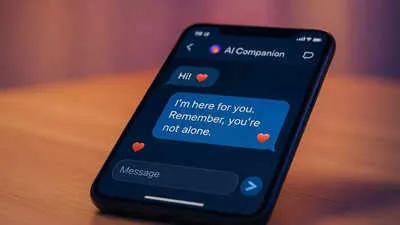
A new study from the Massachusetts Institute of Technology has uncovered a striking cultural shift in the United States, revealing that many Americans are forming deep emotional bonds — and in some cases romantic attachments — with artificial intelligence chatbots. Driven by rising loneliness, expanding digital interaction, and increasingly human-like conversational systems, AI companions are emerging as emotional substitutes for traditional human relationships. The research highlights both the psychological comfort these systems provide and the long-term societal questions they raise, including concerns around emotional dependence, ethical design, and the evolving definition of intimacy in a technology-driven world.
---
Growing Emotional Bonds With AI
The MIT study notes a rapid increase in Americans turning to AI for companionship, emotional support, and romantic interaction. The technology — which now simulates empathy, memory, and conversational nuance — is creating spaces for connection once filled by family, friends, or romantic partners.
Users frequently cite consistency, non-judgmental listening, and 24/7 availability as reasons they prefer conversational AI during moments of stress or isolation. Many respondents described their AI interactions as comforting, validating, and mentally stabilizing — illustrating a growing belief that virtual companionship can be as emotionally fulfilling as human connection.
---
Why AI Romance Is Rising
Researchers identified several key factors driving this trend:
Loneliness epidemic: With social isolation rising, especially among younger adults, AI platforms offer immediate emotional presence.
Digital-native culture: Younger generations increasingly form relationships online, easing adoption of AI interaction.
Advanced AI design: Human-like language modeling allows systems to mimic emotional responsiveness.
Reduced relationship pressure: AI presents a space free from conflict, judgment, or social expectations.
What once seemed hypothetical has now become a normalized emotional support structure in the digital era.
---
Ethical & Social Implications
While the study recognizes mental-health benefits for some users, it raises critical questions about emotional dependency and psychological boundaries. Concerns include:
Potential erosion of real-world social skills
Emotional attachment to entities programmed for behavioral reinforcement
Manipulation risks if AI platforms monetize or influence emotional behavior
Impact on future human relationships and societal norms
Experts stress the need for ethical frameworks, urging transparency in AI design and safeguards to protect emotionally vulnerable users.
---
A New Definition of Connection?
This growing phenomenon indicates a cultural pivot toward hybrid emotional ecosystems — where digital and human bonds co-exist. As AI continues to evolve, psychologists and technologists suggest that companion systems could become a formal part of emotional wellness infrastructure, particularly for individuals facing isolation.
However, the long-term psychological effects remain uncertain. The study encourages policymakers, mental-health professionals, and tech developers to collaboratively shape responsible usage, ensuring technology enhances human connection rather than replaces it.
Comments