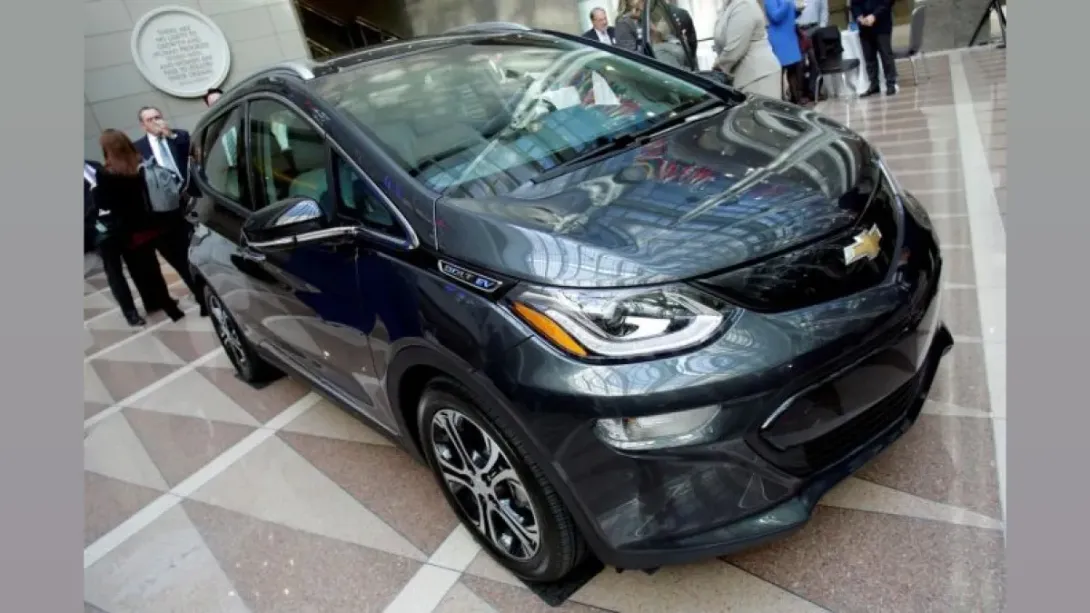
India’s transition to electric mobility has taken a sharper turn with NITI Aayog advocating for a clearly defined National Electric Vehicle (EV) policy that includes measurable adoption targets and fiscal clarity. The think tank has urged the government to establish a uniform roadmap for EV growth across states, pushing for harmonized regulatory frameworks, production-linked incentives (PLIs), and coordinated infrastructure planning. The proposed policy aims to catalyze domestic manufacturing, expand charging infrastructure, and align the automotive ecosystem with long-term sustainability goals. This development signals a renewed institutional push toward decarbonizing transport and positioning India as a global EV manufacturing hub.
Strategic Push for EV Penetration
NITI Aayog, India's apex policy institution, has intensified its pitch for a comprehensive national EV framework that moves beyond fragmented, state-level approaches. At the heart of the recommendation is the need for time-bound targets that can guide stakeholders — from manufacturers and investors to consumers and state governments — in aligning their strategies toward a unified national vision.
By proposing quantifiable targets for EV penetration across vehicle segments — including two-wheelers, three-wheelers, passenger cars, and commercial vehicles — NITI Aayog seeks to infuse clarity and accountability into India’s electric mobility transition.
Uniform Policy Framework Across States
One of the key concerns addressed by NITI Aayog is the disparity in EV policies adopted by different states, leading to inefficiencies and regulatory uncertainty. The proposed national policy would function as a centralized framework, encouraging states to implement EV programs that are consistent with federal targets while allowing for region-specific customization.
This harmonized structure would streamline decision-making, improve coordination between ministries, and reduce policy fragmentation — a challenge that currently hinders the scale-up of EV infrastructure and manufacturing.
Infrastructure, Financing, and Incentives
The think tank's policy proposal emphasizes the importance of expanding the country’s EV charging network and supporting it with a well-defined financing model. By integrating financial institutions into the ecosystem, NITI Aayog envisions a robust mechanism to de-risk investments and reduce the cost of capital for EV projects.
Additionally, the policy suggests deepening the scope of production-linked incentive schemes, particularly for battery manufacturing and component localization, to reduce dependence on imports and strengthen domestic supply chains.
Driving Demand Through Clear Milestones
Demand creation remains a cornerstone of the proposed EV strategy. NITI Aayog has recommended that the government establish targets for EV adoption in public fleets, corporate logistics, and government vehicles, thereby creating demonstrable use cases for mass transition.
With milestones set for different time horizons — such as 2027, 2030, and beyond — the framework would also incorporate key performance indicators (KPIs) to track implementation, ensuring transparency and results-based policy evaluation.
Industry Response and Market Readiness
Automotive industry stakeholders have generally welcomed the call for a centralized EV strategy, citing the need for predictable regulations and consistent incentives to facilitate long-term investment. Industry leaders are particularly optimistic about the potential for export-led growth if India is able to consolidate its EV manufacturing capabilities through clear and stable policy support.
However, success hinges on effective execution — including timely land allocation for manufacturing, ease of permitting for charging stations, and the integration of EVs into smart city transport systems.
Conclusion
NITI Aayog’s push for a clearly articulated National EV Policy reflects a growing institutional commitment to green mobility and industrial modernization. With synchronized efforts across regulatory bodies, industry players, and financial institutions, India stands poised to fast-track its electric vehicle ambitions. The proposal not only envisions domestic transformation but also strengthens the country's competitive edge in the global EV value chain — a critical lever for sustainable economic growth in the decades to come.
Comments