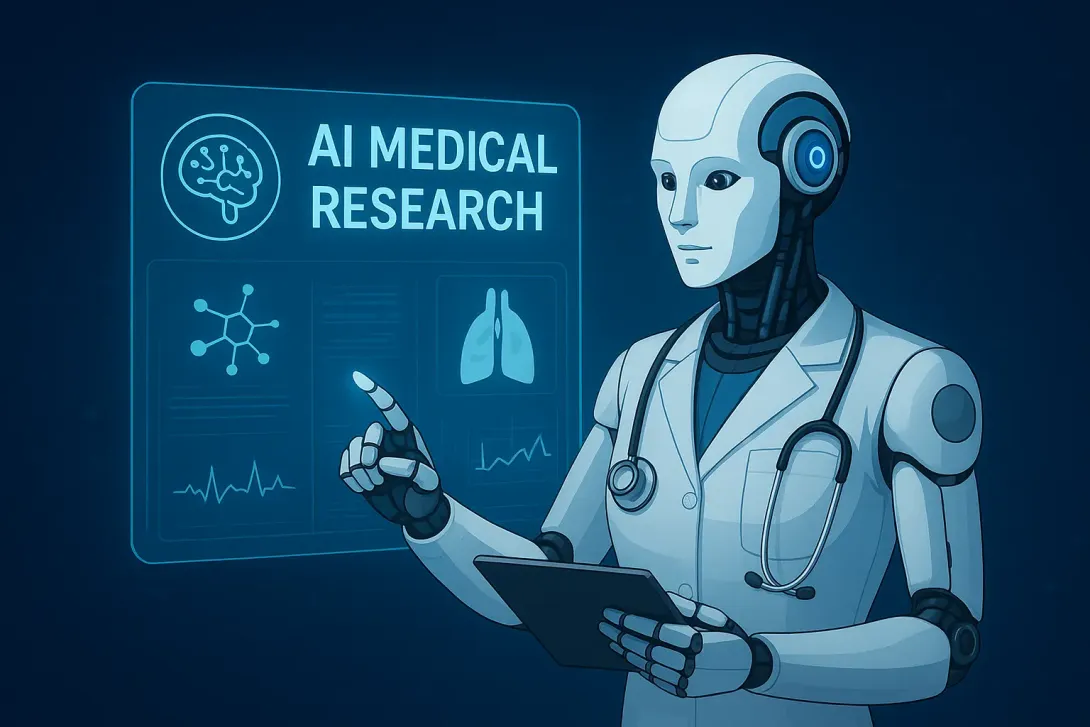
NASA has partnered with Google to create a cutting-edge AI medical assistant aimed at supporting astronauts on long-duration lunar and Mars missions. This collaboration seeks to leverage artificial intelligence to provide real-time health monitoring, diagnostics, and medical guidance in environments where immediate human medical support is unavailable. The initiative underscores the increasing role of AI in space exploration, ensuring astronaut safety and mission success amid the challenges of deep space. By integrating advanced machine learning and autonomous decision-making, the project aims to establish a reliable healthcare support system for extraterrestrial missions, setting a precedent for future interplanetary human endeavors.
Collaboration Overview
NASA and Google are combining their expertise in space exploration and artificial intelligence to develop a medical assistant capable of operating independently in space. The AI system is designed to monitor vital signs, detect health anomalies, and offer immediate guidance to astronauts, minimizing the risks associated with delayed medical intervention during extended missions.
Technological Capabilities
The AI assistant will employ machine learning algorithms to analyze physiological data, predict potential health issues, and provide evidence-based recommendations. Leveraging natural language processing, astronauts can interact with the system intuitively, receiving instructions and support for medical procedures without direct input from Earth-based specialists.
Applications for Lunar and Mars Missions
As astronauts venture farther from Earth, communication delays can hinder timely medical intervention. The AI medical assistant addresses this challenge by serving as a reliable on-site support system. It will enhance mission safety during lunar expeditions and Mars missions, where travel time and environmental hazards make traditional healthcare access impossible.
Broader Implications
Beyond space exploration, the development of AI-driven medical systems has potential applications on Earth, particularly in remote or resource-limited regions. Lessons learned from deploying AI in space can inform autonomous healthcare solutions in hospitals, disaster zones, and isolated communities.
Conclusion
The NASA-Google partnership exemplifies how artificial intelligence can revolutionize human spaceflight. By providing astronauts with an intelligent, responsive medical support system, the project not only enhances safety in extreme environments but also lays the foundation for innovative healthcare applications both in space and on Earth.
Comments