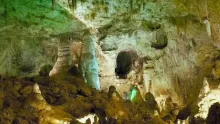
Scientists have identified a previously unknown biological process—described as “dark photosynthesis”—inside a cave system in New Mexico, challenging long-held assumptions about how life sustains itself. The discovery reveals that certain microorganisms can produce energy in complete darkness by using chemical reactions instead of sunlight. This breakthrough reshapes scientific understanding of photosynthesis, expands the known limits of life on Earth and carries profound implications for climate science, evolutionary biology and the search for life beyond our planet.

