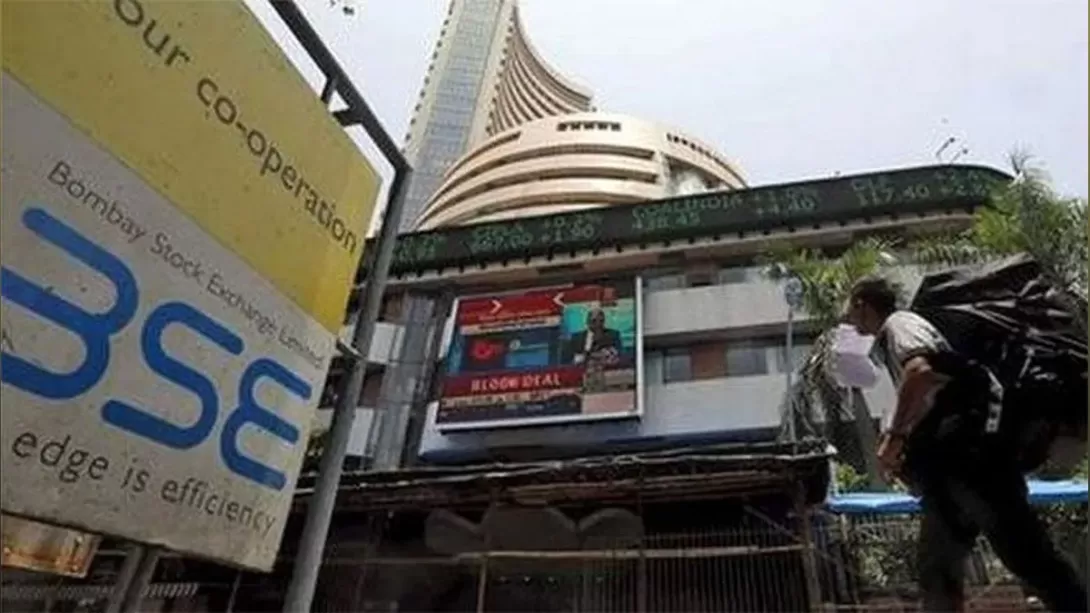
Indian equity markets faced sharp declines in late morning trade Friday, driven by heightened tensions with Pakistan following a series of military exchanges across the border. The BSE Sensex tumbled over 770 points, while the NSE Nifty shed more than 200 points amid fears of further escalation. Despite the geopolitical shock, analysts remain cautiously optimistic, citing India’s military superiority, resilient macroeconomic fundamentals, and continued foreign investment inflows. Gains in heavyweight firms such as Larsen & Toubro and Titan provided some cushion to the broader indices, even as defensive profit-taking weighed down key banking and energy stocks.
Stock Indices Tumble on Border Tensions
Equity markets in India opened on a somber note Friday, extending the previous session’s declines as news of intensifying hostilities with Pakistan rippled across trading floors. The benchmark 30-share BSE Sensex plunged by 771.01 points to 79,566.02, while the broader NSE Nifty dropped 205.55 points, settling at 24,068.25 during late morning trade.
The downward momentum followed India’s retaliatory missile strikes on nine terror-linked targets in Pakistan and Pakistan-occupied Kashmir under Operation Sindoor, a mission launched in response to a deadly terrorist attack earlier this month. Pakistan responded with attempted drone and missile attacks near Indian military installations, including in Jammu and Pathankot, which were swiftly neutralized by Indian forces.
Investor Sentiment: Wary But Not Panicked
While the prospect of prolonged conflict triggered caution, analysts stopped short of forecasting a prolonged market meltdown. VK Vijayakumar, Chief Investment Strategist at Geojit Financial Services, noted that under typical conditions, such geopolitical shocks would have resulted in more severe losses. However, India’s demonstrated dominance in conventional military capabilities has helped contain market anxiety.
"The market is inherently resilient," Vijayakumar said. "Supported by strong domestic fundamentals and favorable global macros such as a weakening dollar and slowing U.S. and Chinese growth, India remains an attractive investment destination."
Sector Performance: Winners and Laggards
Most sectoral indices traded in the red, with financials and utilities under significant pressure. Among the notable laggards were Power Grid, ICICI Bank, NTPC, Adani Ports, UltraTech Cement, Bajaj Finserv, and Bajaj Finance. These firms saw declines amid broad-based risk-off sentiment and investor preference for liquidating equity holdings.
However, selective gains were observed in companies with strong quarterly results. Larsen & Toubro (L&T) saw its stock rise by 4% after reporting a consolidated profit after tax of Rs. 5,497 crore for the quarter ending March 31, 2025—a 25% year-over-year increase driven by higher revenue and exceptional gains.
Similarly, Titan Company surged nearly 4% following its robust performance, posting a 13% rise in consolidated profit after tax to Rs. 871 crore for the same quarter. The uptick was attributed to strong retail sales, particularly in the jewelry and accessories segments.
Tata Motors, State Bank of India, Asian Paints, and Mahindra & Mahindra also emerged as gainers, offering some ballast to the falling indices.
FIIs Maintain Confidence Despite Volatility
Interestingly, foreign institutional investors (FIIs) remained net buyers amid the geopolitical strain. According to exchange data, FIIs purchased Indian equities worth Rs. 2,007.96 crore on Thursday, reflecting continued confidence in India’s long-term growth trajectory despite short-term volatility.
This steady inflow serves as a counterbalance to domestic profit-booking, which has accelerated in recent sessions as investors brace for potential escalation in cross-border tensions.
Global Cues: Mixed Trends Across Asia
In the broader Asian region, market reactions were mixed. South Korea’s Kospi and Shanghai’s SSE Composite Index edged lower, while Japan’s Nikkei 225 and Hong Kong’s Hang Seng Index traded in positive territory, reflecting optimism over potential monetary easing and moderating inflation.
On Wall Street, major U.S. indices closed higher Thursday, supported by investor expectations that the Federal Reserve may slow rate hikes amid signs of economic softening. Meanwhile, Brent crude oil gained 0.53% to USD 63.17 per barrel, with energy traders monitoring developments in South Asia closely.
Conclusion: Navigating Through Uncertainty
India’s financial markets are walking a tightrope between geopolitical risk and macroeconomic resilience. While the sharp drop in benchmark indices underscores the fragility of investor sentiment during national security crises, the underlying economic story remains robust.
As long as the conflict does not spiral into a protracted confrontation, markets are expected to weather the turbulence. For investors, caution is warranted, but panic is premature. Strategic positioning, backed by fundamentals and a watchful eye on developments, remains the prudent path forward.
Comments