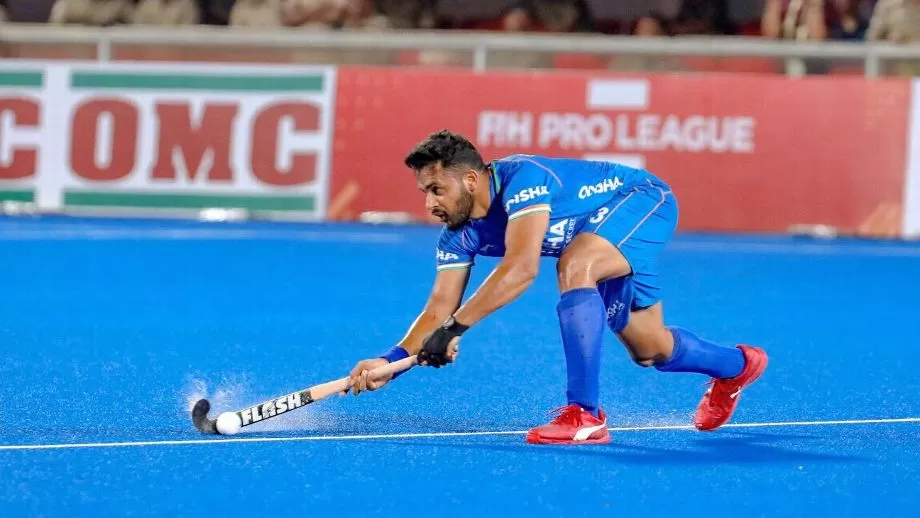
India’s FIH Pro League campaign continued its downward spiral with a fifth straight defeat, this time at the hands of Australia in a nail-biting 3-2 finish in Antwerp. Despite an early brace by Abhishek and commanding performances from goalkeeper Suraj Karkera, the Indian side faltered in the second half, conceding three unanswered goals. A last-minute deflection by Australia’s Tom Craig sealed India's fate, echoing a familiar pattern of late-game collapses seen in previous fixtures against Argentina and the Netherlands. As concerns deepen over tactical discipline and mental fortitude, India’s slump has exposed key vulnerabilities in their defensive structure and match management.
A Promising Start Undone by Familiar Mistakes
India entered the fixture against Australia seeking redemption after back-to-back losses against Argentina and the Netherlands. Their opening momentum seemed promising. Within minutes, Abhishek delivered a clinical finish, capitalizing on a sharp pass from Manpreet Singh. Using a deft half-turn, he placed a low, precise shot past Jed Snowden, giving India a 1-0 lead.
India extended their advantage midway through the third quarter. A high press from Sukhjeet Singh forced a turnover, allowing Abhishek to strike again—this time with a powerful reverse shot that overwhelmed goalkeeper Ashleigh Thomas. With a 2-0 cushion and a solid showing from Karkera in goal, India appeared to be in control.
Defensive Fragility and Tactical Collapse
The tide began to turn late in the third quarter when Australia's Nathan Ephraums capitalized on a goalmouth scramble, lofting the ball into an open net. India, up to that point disciplined in their backline, lost their shape under increasing pressure. Their inability to maintain possession or create further chances in the attacking third made them increasingly vulnerable.
Australia’s equalizer came with five minutes left in regulation. Joel Rintala’s fierce dragflick from a penalty corner evaded Karkera, leveling the score at 2-2. The momentum fully shifted to the Australians, and with only 43 seconds remaining, India’s penalty corner defense collapsed again. A low dragflick from Jeremy Hayward took a decisive deflection off Tom Craig, completing Australia’s dramatic comeback.
Recurring Late-Game Woes
India’s fifth consecutive defeat follows a disturbing pattern—strong starts undermined by defensive breakdowns in the closing stages. Against both Argentina and the Netherlands, India conceded game-winning goals late, reflecting issues with concentration, fitness, or possibly both. The consistent inability to defend set-pieces in crunch moments points to deeper structural and coaching deficiencies that need immediate attention.
The team's overreliance on early momentum and individual brilliance—like that shown by Abhishek—contrasts starkly with their lack of coordination and discipline in the dying phases of matches.
Looking Ahead: Time for Tactical Recalibration
India’s slump in the Pro League now raises significant concerns ahead of the Paris 2024 Olympics. The frequency of these collapses suggests not only lapses in strategy but also shortcomings in game management and situational awareness. While there have been flashes of individual excellence, they are being routinely overshadowed by a collective inability to close out games.
Coaches and team leadership will need to evaluate both personnel deployment and psychological conditioning. Fine-tuning defensive cohesion during set pieces and building late-match resilience must now take precedence if India hopes to regain its competitive edge on the global stage.
Conclusion:
India’s defeat against Australia was not just a loss in numbers but a missed opportunity to reverse a troubling trend. The match underscored how individual talent can be nullified by systemic flaws and mental lapses. Unless the national side can address these recurring issues with tactical rigor and psychological toughness, aspirations for a podium finish in upcoming international tournaments may remain elusive.
Comments