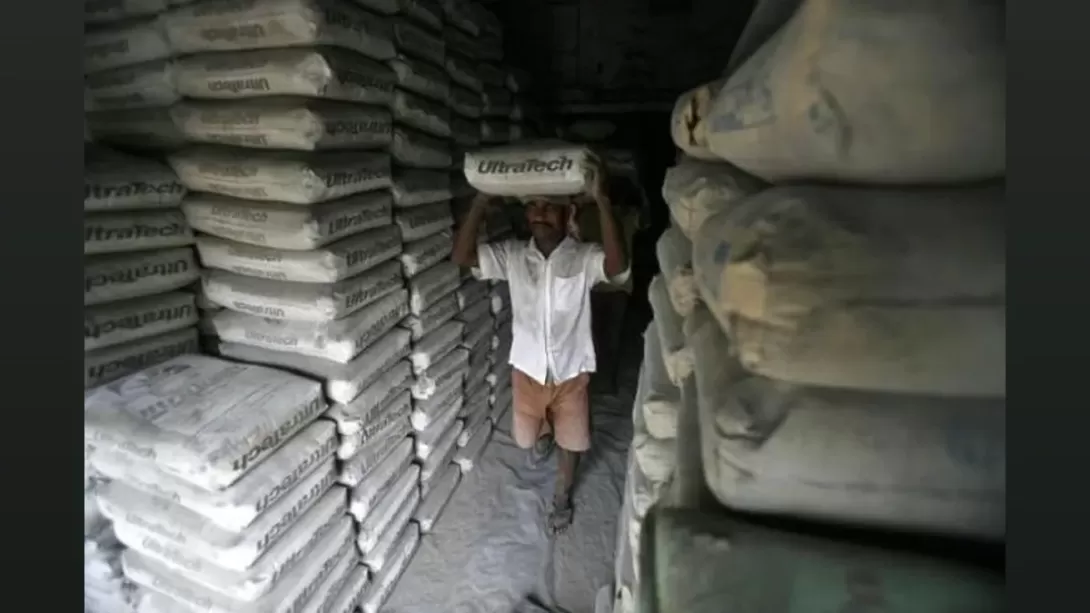
India’s cement industry demonstrated encouraging volume growth in the March 2025 quarter, with leading firms such as UltraTech, Ambuja, ACC, Shree Cement, and Dalmia Bharat projecting sustained expansion in FY26. Industry volumes grew between 3.5% and 10% year-on-year, driven by infrastructure spending and rural demand recovery. However, declining cement prices—down 7% in FY25—and geopolitical uncertainties pose risks to revenue growth. Despite these challenges, margin improvements are anticipated, supported by stable input costs and moderate price hikes. The sector continues consolidating, with large players expanding capacities and acquiring smaller firms to strengthen market dominance.
Volume Growth Signals Resilience Despite Pricing Headwinds
The March 2025 quarter witnessed healthy volume gains across major listed cement manufacturers in India. UltraTech reported a near 10% increase in consolidated sales volumes, reaching 41.02 million tonnes, contributing to its record fiscal year total of 135.83 million tonnes. Ambuja Cements, the country’s second-largest producer, logged its highest-ever quarterly volume at 18.7 million tonnes. Other players, including Shree Cements and Dalmia Bharat, also posted significant volume upticks, highlighting sustained demand driven by infrastructure projects and rural economic recovery.
However, this volume growth was tempered by lower year-on-year price realizations. The all-India average cement price stood at approximately Rs 350 per 50 kg bag in March 2025, reflecting a 7% decline from Rs 365 per bag in FY24, according to Icra. This pricing pressure, combined with cautious market sentiment linked to geopolitical tensions and trade uncertainties, constrains topline growth despite improving sales volumes.
Sector Consolidation and Capacity Expansion
The Indian cement sector is witnessing pronounced consolidation, as larger entities absorb smaller competitors to achieve economies of scale and broaden their geographic footprints. UltraTech’s expansion strategy, supported by acquisitions and greenfield capacity additions, propelled its capacity to approximately 655 million tonnes in FY25, up from 625 million tonnes the previous year. Ambuja Cement Group also crossed the 100 million tonnes per annum capacity milestone and targets 118 million tonnes by FY26, driven by ongoing pipeline projects.
Shree Cements, despite a 14.9% decline in net profit to Rs 575 crore during the March quarter, reported a 2.42% revenue increase and its highest quarterly volume at 9.84 million tonnes. The firm continues to focus on premium product segments, forecasting sustained demand growth of 6.5% to 7.5% industry-wide in FY26.
Financial Performance and Profitability Outlook
While volumes have been encouraging, revenue growth for several companies remains muted due to price softening. Dalmia Bharat’s sales volume increased by 2.8% to 8.6 million tonnes, yet its revenues dipped 5% to Rs 4,091 crore. India Cements, now part of the Aditya Birla Group, reported a net profit rebound to Rs 14.68 crore, though revenue declined marginally.
Conversely, Birla Corporation showed strong financial gains, with a 32.7% surge in net profit to Rs 256.6 crore and a 6% rise in revenue, underscoring the divergent performance dynamics within the sector. Orient Cement, integrated into the Ambuja portfolio, faced a significant 38.3% net profit contraction and a 7% revenue dip during the quarter.
Looking ahead, rating agencies such as Icra anticipate operating margin improvement in FY26, supported by stable input costs—particularly for coal, petcoke, and diesel—and potential modest price increases.
Geopolitical and Market Risks
Industry executives express caution regarding geopolitical developments and evolving global trade conditions, which may affect supply chains and cost structures. Despite these external headwinds, the sector’s fundamentals remain robust, anchored by government infrastructure initiatives and a recovering rural economy.
Conclusion: Optimism Amid Challenges
India’s cement industry is positioned for steady volume growth in FY26, buoyed by infrastructure investments and rural demand resurgence. However, pricing pressures and geopolitical uncertainties warrant vigilance. The ongoing sector consolidation and capacity augmentation by leading players like UltraTech and Ambuja Cement will likely drive operational efficiencies and market share gains. Ultimately, the sector’s ability to navigate these complexities will determine its trajectory in the coming fiscal year.
Comments