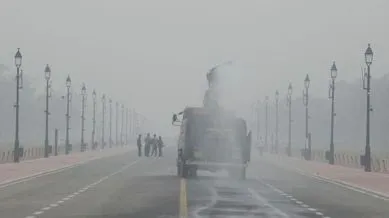
As Delhi continues to choke under a dense blanket of smog, health experts are urging residents to take drastic precautions to protect themselves from the worsening air crisis. A leading pulmonologist has advised citizens who can afford it to temporarily leave the city for six to eight weeks until air quality improves. With the Air Quality Index (AQI) hovering in the ‘severe’ category, the national capital has once again turned into a gas chamber, raising alarms about respiratory diseases, heart complications, and long-term health impacts. The warning underscores the urgent need for systemic intervention and public awareness.
---
Toxic Air Returns to Delhi
Each winter, Delhi witnesses a grim ritual—the return of toxic air that transforms its skyline into a haze of pollutants. In recent days, air quality levels have plunged to hazardous levels across the city and adjoining regions, with the AQI consistently exceeding 450 in several zones. Visibility has dropped sharply, schools have curtailed outdoor activities, and hospitals are reporting a surge in respiratory complaints.
Environmental experts attribute this decline to a combination of stubble burning in neighboring states, vehicular emissions, industrial pollutants, and stagnant weather conditions that trap pollutants close to the ground. Despite repeated policy interventions, Delhi’s pollution crisis remains a recurring nightmare, exposing millions to severe health risks.
---
Pulmonologist’s Stark Warning
Amid this environmental emergency, a top pulmonologist has issued a stark advisory: if residents can afford to, they should consider leaving Delhi for six to eight weeks. The doctor emphasized that prolonged exposure to such toxic air could lead to irreversible respiratory damage, especially for vulnerable groups such as children, the elderly, and individuals with preexisting lung or heart conditions.
He further noted that even high-end air purifiers and masks offer limited protection against ultrafine particulate matter (PM2.5), which penetrates deep into the lungs and bloodstream. According to him, temporary relocation to areas with cleaner air might be the most effective short-term preventive measure for those with the means to do so.
---
Health Impacts Intensify
The immediate effects of Delhi’s air pollution are evident in the growing number of patients seeking treatment for persistent coughs, throat irritation, breathlessness, and fatigue. Long-term exposure, however, carries even greater dangers—ranging from chronic bronchitis and asthma to cardiovascular diseases and reduced life expectancy.
Doctors report that even healthy individuals are showing symptoms of respiratory distress. Children, in particular, are at heightened risk, as their lungs are still developing and absorb more pollutants per unit of body weight. The situation has once again drawn attention to the deep-seated public health emergency that urban pollution poses in India.
---
Policy Challenges and the Way Forward
Despite several emergency measures—such as restrictions on construction, vehicular curbs, and the promotion of green fuel—the capital’s pollution problem persists due to structural inefficiencies and lack of regional coordination. Experts argue that without sustainable agricultural reforms to curb stubble burning, stricter industrial regulation, and long-term investments in renewable energy, Delhi’s air crisis will continue to worsen each year.
The pulmonologist’s advice, though stark, underscores a painful truth: the city’s pollution has reached a point where escape seems safer than endurance. While relocation is a privilege few can afford, the warning serves as a wake-up call for policymakers to treat clean air not as a luxury—but as a fundamental right.
---
Conclusion: A Crisis Beyond Tolerance
Delhi’s annual struggle with toxic air has become a grim symbol of urban neglect and environmental apathy. As citizens gasp for breath, the message from medical experts is clear—protect yourself if you can, and demand accountability if you cannot. Until India enforces decisive, region-wide action, the capital’s skyline will remain a cautionary tale of what happens when development outpaces sustainability.
Clean air is not a seasonal demand—it is a necessity for survival.
Comments