India’s automotive retail landscape in FY25 has been marked by a resilient uptick, driven primarily by the performance of the two-wheeler segment. Hero MotoCorp has emerged as the clear market leader, with over 5.4 million units sold, regaining momentum in an increasingly competitive environment. Data from the Federation of Automobile Dealers Associations (FADA) underscores broader sectoral gains, including an 8% rise in two-wheeler registrations and a 6% overall boost in automotive retail activity. With rural demand outpacing urban uptake, India’s automotive sector seems to be on a steady upward trajectory, supported by brand leadership, pricing strategies, and regional consumption dynamics.
Hero MotoCorp: Steering Steadily Through Competition
Hero MotoCorp has once again affirmed its dominance in India’s two-wheeler market, selling a remarkable 5,445,251 units in FY25. Capturing a commanding market share of 28.84%, the company has not only sustained its leadership position but expanded its influence amid intensifying competition. This surge comes as the brand strategically focuses on affordable commuting options, rural market penetration, and incremental product innovations.
Despite the emergence of rival brands and the rise of electric vehicle alternatives, Hero’s robust distribution network and brand equity, particularly in tier-2 and tier-3 cities, remain its most critical assets.
Rivals in Pursuit: Competitive Dynamics Shift
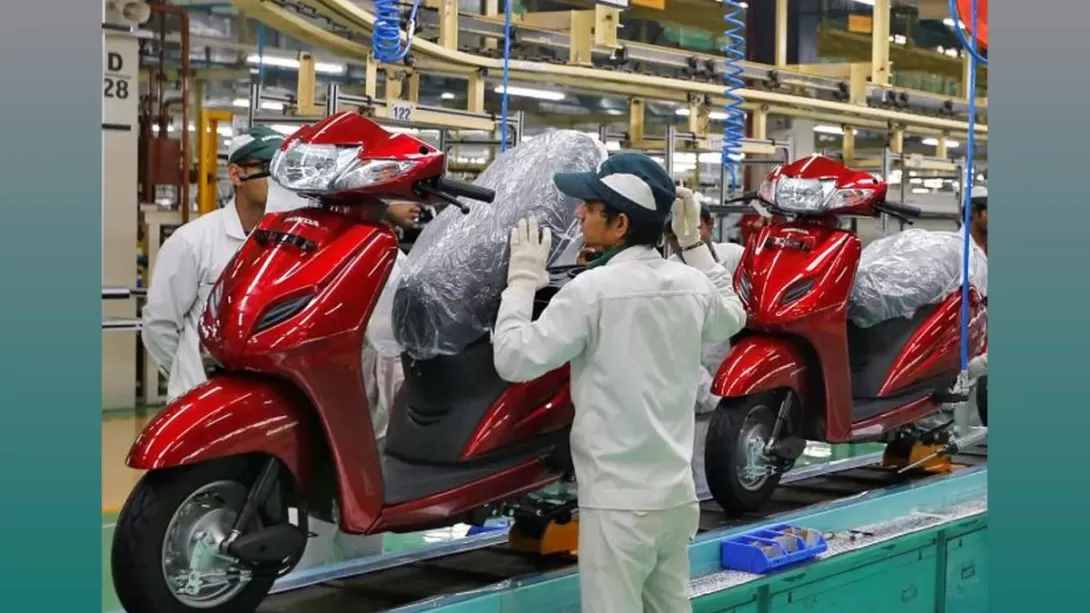
Honda Motorcycle & Scooter India retained its second position with 4,789,283 units sold, translating to a 25.37% market share. Though trailing Hero, Honda’s performance demonstrates its strong appeal among urban commuters, particularly through its scooter lineup.
TVS Motor Company followed closely in third place, retailing 3,301,781 units. With a market share of 17.49%, TVS has consistently leveraged its product diversification—ranging from sporty motorcycles to electric scooters—to cater to an evolving customer base.
Together, these three manufacturers accounted for over 70% of India’s two-wheeler retail sales, underscoring the consolidated nature of the segment even as new players attempt to disrupt the space.
Wider Market Growth: Rural Demand Leads the Way
The broader two-wheeler market recorded an 8% year-on-year increase, with registrations reaching 18,877,812 units, up from 17,527,115 units in FY24. Notably, rural areas outpaced urban regions in terms of growth, buoyed by improved farm incomes, stable monsoons, and increased infrastructure development that has boosted last-mile mobility needs.
This resurgence also aligns with government-led initiatives in transportation and mobility, making personal vehicles increasingly accessible to the lower- and middle-income demographic.
Passenger Vehicles: Maruti Suzuki Holds Strong
In the passenger vehicle segment, Maruti Suzuki remained unchallenged, selling 1,671,559 units and securing a 40.25% market share. Despite a marginal dip from FY24’s 40.6%, the brand continues to dominate, benefiting from consistent product launches and customer trust.
Hyundai Motor India ranked second with 559,149 units, although its market share slipped to 13.46% from 14.21%. Tata Motors closely followed, posting a 12.9% share with 535,960 units sold. Meanwhile, Mahindra & Mahindra recorded one of the most significant year-on-year improvements, selling 512,626 units—a rise from 427,390 in FY24—boosting its market share to 12.34%.
Passenger vehicle retail sales as a whole rose by 5% to 4,153,432 units, indicating resilience despite inflationary pressures and global supply chain uncertainties.
Macroeconomic Trends and Retail Performance
India’s total automotive retail sales reached 26,143,943 units in FY25, representing a 6% increase over the previous year. This growth underscores a rebound in consumer confidence, particularly in rural regions where automotive purchases often correlate with economic cycles tied to agriculture, remittances, and seasonal employment.
Automakers that have tailored financing schemes, optimized vehicle affordability, and invested in localized marketing have seen the strongest returns. In this climate, brands like Hero MotoCorp—rooted in affordability and widespread availability—are poised to retain their stronghold even as new challenges emerge, including the accelerating transition to electric vehicles and evolving regulatory standards.
Conclusion: Hero’s Triumph in a Revitalized Market
Hero MotoCorp’s performance in FY25 is a testament to its enduring market strategy, execution strength, and adaptability. As India’s mobility sector continues to evolve—driven by rural demand, macroeconomic recovery, and consumer aspirations—the two-wheeler segment remains a vital pillar of growth.
For investors, analysts, and market participants, Hero’s trajectory offers insights into how legacy manufacturers can hold their ground amid disruption, provided they remain agile, localized, and customer-focused. With foundational infrastructure now in place and sector-wide momentum building, India’s automobile industry is accelerating toward a more expansive, inclusive, and technologically integrated future.
Comments