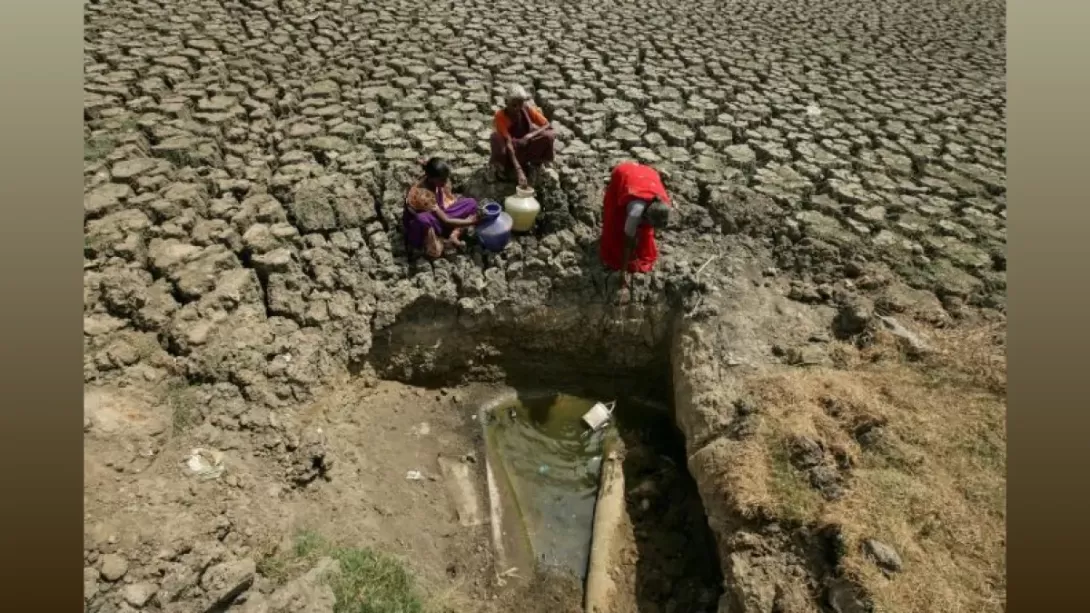
Union Agriculture Minister Shivraj Singh Chouhan, during his recent visit to Patiala, urged farmers to embrace crop diversification as a strategic move to enhance profitability while conserving water. Emphasizing the importance of sustainable agriculture practices, he highlighted the success of the Direct Seeding of Rice (DSR) technique. Additionally, Chouhan discussed the Centre’s stance on the Indus Waters Treaty following recent geopolitical tensions, stating that water from the Indus, Jhelum, and Chenab rivers would now be redirected to benefit Punjab, Haryana, and Rajasthan. His visit underscored the government's focus on improving crop yield, reducing input costs, and ensuring farmers’ well-being.
A Call for Sustainable Farming Practices in Punjab
Shivraj Singh Chouhan, India’s Union Agriculture Minister, has been actively engaging with the farming community, urging them to consider crop diversification as an essential strategy for both profitability and sustainability. During a recent visit to Patiala in Punjab, Chouhan met with local farmers in the village of Gandia Kheri, where he discussed various agricultural practices, listened to farmers' concerns, and provided insights into the government’s agricultural initiatives.
Chouhan emphasized that farmers need to grow crops that are not only profitable but also require less water, in response to growing concerns over water scarcity in the agricultural sector. “Crop diversification is crucial,” he said. “We need to shift towards crops that give better returns while also conserving our precious water resources.”
A Look at the Viksit Krishi Sankalp Abhiyan
Chouhan’s visit is part of the government’s larger initiative, the Viksit Krishi Sankalp Abhiyan (Developed Agriculture Mission). Under this campaign, the government is reaching out to farmers to understand their challenges and inform them of the latest agricultural research that can improve productivity and efficiency. The campaign also aims to integrate scientific research with on-the-ground farming practices, ensuring that farmers benefit from the latest innovations in crop cultivation.
One notable example discussed during the meeting was the technique of Direct Seeding of Rice (DSR), which is being employed by several farmers in Punjab. This method has shown promising results in reducing water consumption during rice cultivation. Chouhan urged farmers to adopt this technique, noting that it has significant potential to address the growing water scarcity issue. He acknowledged the impressive outcomes of DSR, along with other innovations such as mushroom farming and silage production, which farmers in Punjab are exploring as alternative income sources.
Agriculture’s Vital Role in India’s Food Security
Chouhan lauded Punjab's contribution to India’s food security, particularly its role in ensuring the country's wheat, paddy, maize, and soybean stocks. He stressed that the state’s farmers were vital to achieving record production levels this year, despite the challenges they face. “For this, Punjab has the biggest role, and I bow to the land of Punjab,” Chouhan said, underscoring the state's essential role in feeding the nation.
With Prime Minister Narendra Modi’s target to increase crop output, reduce input costs, and ensure fair remuneration for farmers, Chouhan reassured farmers that the government is committed to their welfare. The overarching goal is not only to increase yield but also to ensure that farmers have access to a stable and rewarding income, alongside support in times of crop loss.
Strategic Water Management: Reassessing the Indus Waters Treaty
A significant portion of Chouhan’s address focused on India’s recent decision to suspend the Indus Waters Treaty with Pakistan following the Pahalgam terror attack in April 2022. The treaty, originally signed in 1960, governs the sharing of water from the Indus River system, including the Indus, Jhelum, and Chenab rivers. In light of the recent attack, Chouhan asserted that India would now prioritize the utilization of these rivers' waters for domestic use, particularly for the agricultural needs of Punjab, Haryana, and Rajasthan.
“Giving 80% of the water from the Indus, Chenab, and Jhelum rivers to Pakistan at that time was not justified,” Chouhan remarked. "This water belongs to us, and now it will be used for the farmers of Punjab, Haryana, and Rajasthan.” The minister’s statement underscores the shift in India’s policy towards better utilizing regional water resources to meet its agricultural and developmental needs.
Addressing Fake Pesticides and Farmer Protection
Chouhan also addressed the growing problem of counterfeit pesticides, which have caused significant harm to farmers' crops and livelihoods. In response to the issue, he assured farmers that the government would soon introduce a new law that would impose stricter penalties on companies that manufacture and distribute fake pesticides. This move reflects the government’s commitment to ensuring that farmers are protected from exploitation and that they have access to safe, reliable agricultural inputs.
The Road Ahead: Empowering Farmers and Ensuring Growth
Chouhan’s visit to Patiala and his discussions with farmers have highlighted the pressing need for systemic change in India’s agricultural sector. While Punjab’s farmers are already making strides in sustainable farming practices, the broader national goal remains clear: to support crop diversification, reduce water usage, and promote agricultural innovation.
The Viksit Krishi Sankalp Abhiyan and the government’s renewed focus on water resource management demonstrate a forward-thinking approach that seeks to balance growth with sustainability. As India’s agricultural sector grapples with the dual challenges of water scarcity and rising input costs, these efforts will be crucial in ensuring long-term food security and farmer prosperity.
Chouhan’s engagement with farmers also underlined the importance of dialogue and mutual understanding. By fostering open communication between farmers, scientists, and policymakers, the government hopes to build a more resilient agricultural ecosystem that can adapt to future challenges while driving economic growth in rural areas.
In the coming years, initiatives like these will play a pivotal role in shaping the future of Indian agriculture—empowering farmers, enhancing productivity, and ensuring the nation’s food security in an increasingly uncertain world.
Comments