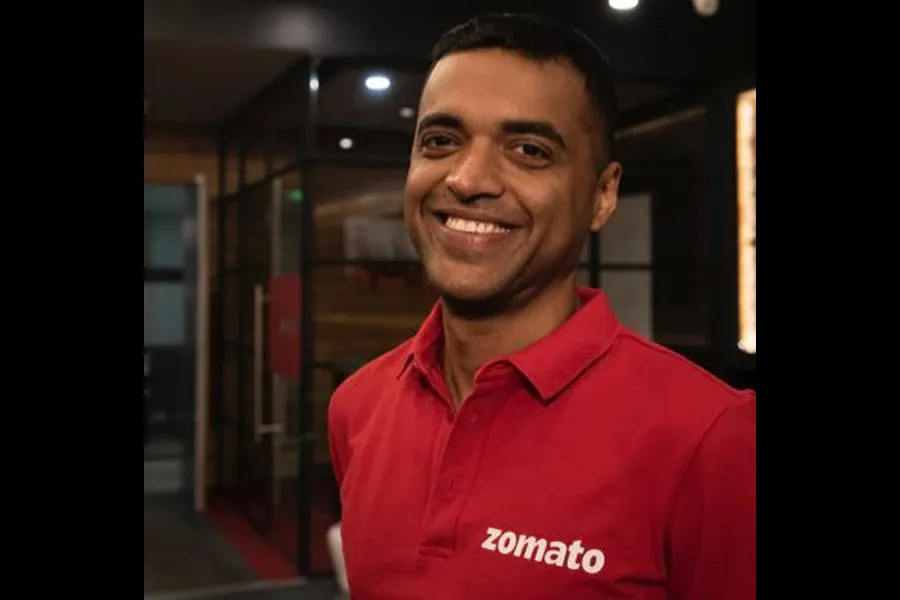
Deepinder Goyal, founder and CEO of Zomato, has emerged as one of India’s most closely watched technology entrepreneurs as he steers the food delivery platform through profitability pressures, regulatory scrutiny and intensifying competition. Under his leadership, Zomato has transitioned from a discount-driven growth model to a capital-disciplined, margin-focused enterprise. The company’s evolution reflects broader shifts in India’s consumer internet economy, where scale alone no longer guarantees investor confidence. Goyal’s strategy emphasizes operational efficiency, ecosystem expansion and selective acquisitions, positioning Zomato to consolidate its market presence while navigating a volatile funding and demand environment.
From Startup Visionary to Public Market Executive
Deepinder Goyal founded Zomato with the ambition of transforming how urban India discovers and orders food. What began as a restaurant discovery platform evolved into one of the country’s largest food delivery networks, connecting millions of consumers with restaurants across hundreds of cities.
Following Zomato’s public listing in 2021, Goyal’s role expanded beyond entrepreneurial leadership into that of a steward accountable to institutional investors, retail shareholders and regulators. The company’s listing marked a watershed moment for India’s internet economy, symbolizing both opportunity and heightened scrutiny.
A Strategic Shift Toward Profitability
In the years immediately following its IPO, Zomato faced the reality confronting many technology-led platforms: revenue growth alone was insufficient to justify valuations. Investors demanded clearer pathways to profitability and stronger cost controls.
Goyal responded by recalibrating the company’s strategy. Marketing expenditures were rationalized, delivery logistics optimized and discount-driven customer acquisition moderated. The emphasis shifted toward contribution margin expansion and operational leverage.
Analysts note that this pivot reflects a broader maturation of India’s digital commerce sector, where capital is no longer abundant and unit economics are paramount.
Competitive Dynamics in Food Delivery
Zomato operates in a fiercely competitive market alongside rivals such as Swiggy. Price competition, restaurant commissions and customer loyalty remain central battlegrounds.
Under Goyal’s leadership, Zomato has sought differentiation through technology integration, subscription models and ecosystem diversification. The company’s expansion into quick commerce and hyperlocal delivery illustrates an attempt to leverage its logistics backbone beyond traditional food delivery.
Industry observers argue that such diversification, while capital intensive, could enhance lifetime customer value and mitigate reliance on a single revenue stream.
Capital Allocation and Investor Confidence
Public markets have imposed a discipline that differs markedly from venture-backed growth cycles. Goyal has emphasized prudent capital allocation, signaling that expansion will be aligned with sustainable cash flow generation rather than purely top-line acceleration.
Zomato’s improved financial metrics in recent quarters have bolstered investor sentiment. The company has reported narrowing losses and, in certain reporting periods, operational profitability—milestones that were once considered distant targets.
This trajectory has positioned Goyal as a case study in entrepreneurial adaptability within a public market framework.
Governance and Leadership Evolution
Leading a publicly traded technology firm demands robust governance structures. Zomato has strengthened board oversight, compliance frameworks and disclosure standards to align with regulatory expectations.
Goyal’s leadership style—often described as candid and data-driven—has been instrumental in communicating strategic priorities to stakeholders. Transparent commentary on challenges, from cost pressures to market saturation, has reinforced credibility among analysts.
In a sector often characterized by exuberance, disciplined communication has become a competitive advantage.
The Road Ahead
India’s consumer internet market remains underpenetrated relative to its population scale. Rising disposable incomes, urbanization and smartphone penetration continue to expand the addressable market for digital services.
Yet growth will be accompanied by intensifying competition, evolving regulatory oversight and shifting investor expectations. For Zomato, sustaining profitability while preserving market share will require operational agility and disciplined expansion.
Deepinder Goyal’s journey—from startup founder to public company executive—mirrors the broader transformation of India’s technology ecosystem. As capital markets demand accountability and sustainable returns, his leadership will be tested not by ambition alone, but by execution.
Comments