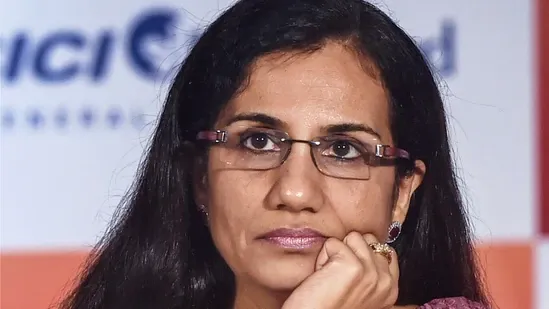
In a significant judgment that casts a long shadow over corporate governance and banking ethics in India, former ICICI Bank CEO and MD Chanda Kochhar has been found guilty in a Rs. 64-crore bribery case. The case is linked to irregularities in the sanctioning of a Rs. 300-crore loan to the Videocon Group during her tenure. This ruling not only revives scrutiny of India’s private banking leadership but also raises broader concerns over conflicts of interest, internal controls, and fiduciary responsibilities at the highest echelons of corporate India.
Background: A High-Profile Fall from Grace
Chanda Kochhar, once celebrated as a trailblazer in India's private banking sector, had risen to the helm of ICICI Bank in 2009. Her tenure was marked by aggressive retail banking expansion and a prominent voice in corporate lending. However, beneath this success story lay transactions that would eventually prompt one of the most high-profile investigations in Indian financial history.
At the heart of the controversy is a Rs. 300-crore loan sanctioned to the Videocon Group by ICICI Bank in 2012. Investigators later uncovered that a company owned by her husband, Deepak Kochhar, allegedly received a Rs. 64-crore investment from Videocon’s founder, Venugopal Dhoot, in what prosecutors claim was a quid pro quo.
Key Findings and Legal Implications
The recent ruling confirmed the central allegations: that Kochhar, in her capacity as CEO, abused her position by facilitating a loan to Videocon in exchange for financial benefits routed through her family’s business interests. The Rs. 64-crore payment, characterized as a "bribe" by investigative authorities, was traced back to a complex network of shell companies and ownership structures.
The court held that the transaction represented a clear conflict of interest and violated established banking protocols. This marks a watershed moment for white-collar accountability in India, underscoring the consequences of corporate misconduct at the highest levels.
ICICI Bank’s Response and Reputational Damage
ICICI Bank had earlier distanced itself from the controversy by first initiating an internal probe and later accepting Kochhar’s resignation in 2018. The institution has since fortified its internal controls and compliance structures to avoid a recurrence of similar incidents.
However, the case has left a lasting scar on the bank’s reputation, particularly in terms of investor confidence and corporate governance standards. For the broader financial sector, the scandal has served as a cautionary tale, prompting institutions to revisit their ethics frameworks, lending transparency, and audit procedures.
Broader Impact on Corporate Governance
The Kochhar-Videocon episode is not an isolated event, but rather a reflection of systemic vulnerabilities in the oversight of boardroom behavior, especially in family-influenced business relationships. The case has triggered calls for tighter regulations on related-party transactions, enhanced due diligence protocols, and improved whistleblower mechanisms.
Moreover, it challenges the assumption that elite leadership is immune to scrutiny, reinforcing the notion that even the most celebrated executives must operate within strict ethical boundaries.
Looking Ahead: A Moment of Reckoning
As sentencing and appeals unfold, the outcome of this case will likely influence future regulatory reforms in India’s banking and financial services industry. It also serves as a stark reminder to corporate leaders of the legal and reputational risks involved in breaching fiduciary trust.
For Chanda Kochhar, the judgment marks a dramatic reversal of a storied career once held up as a model of corporate leadership. For Indian finance, it may well be a turning point that redefines accountability and integrity in the private sector.
This development may well be a catalyst for broader institutional introspection, as India continues its push toward transparency, accountability, and trust in corporate governance.
Comments