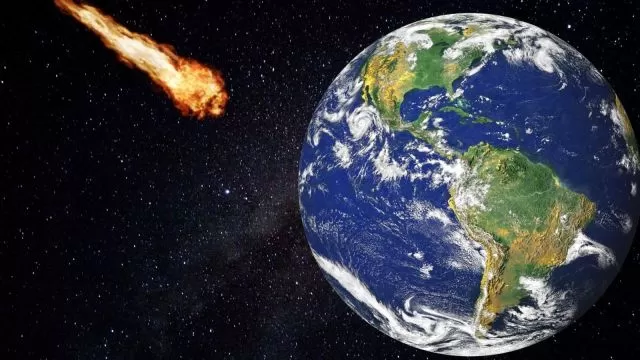
In a tightly monitored celestial event, four asteroids—ranging from house-sized to stadium-scale—are projected to pass safely by Earth between May 23 and May 25, 2025. While there is no risk of impact, these flybys underscore the importance of planetary defense systems and ongoing asteroid surveillance by NASA and other space agencies. The largest among them, asteroid 387746 (2003 MH4), measures approximately 1,100 feet and is being tracked for its flyby on May 24. These occurrences not only provide critical data for planetary safety but also serve as valuable insights into the early formation of the solar system.
A Week of Close Encounters: What to Expect
NASA’s Jet Propulsion Laboratory has flagged a notable cluster of near-Earth asteroid flybys occurring over a three-day period. Though none pose any threat to the planet, the proximity of these space rocks has garnered the attention of astronomers and space agencies worldwide.
The sequence begins on May 23, with the flyby of asteroid 2025 KC, an object roughly the size of a residential building. This asteroid will pass Earth at a distance of 636,000 kilometers, comfortably beyond the Moon’s orbit and far from any hazardous threshold.
On May 24, the two most significant flybys will occur. Asteroid 2025 KL will approach at approximately 1,910,000 kilometers, followed later that day by the largest in the group—asteroid 387746 (2003 MH4)—measuring about 1,100 feet (335 meters). This massive space rock will travel within 4,150,000 kilometers of Earth, close by cosmic standards, but entirely safe.
The final visitor in this sequence is asteroid 2025 KM, expected to pass at a distance of 960,000 kilometers on May 25.
Understanding Asteroids and Their Origins
Asteroids, also called planetoids, are rocky fragments left over from the early formation of our solar system. While most reside in the asteroid belt between Mars and Jupiter, some follow orbits that bring them much closer to Earth, categorizing them as Near-Earth Objects (NEOs).
These celestial bodies vary widely in size—from pebbles to planet-like masses—and while the vast majority pose no risk to Earth, their potential to cause catastrophic damage makes their observation a scientific priority.
NASA’s Near-Earth Object Observations Program, in coordination with international agencies, is responsible for cataloguing and tracking tens of thousands of such bodies using advanced telescopes, radar systems, and automated detection software.
Planetary Defense: A Global Imperative
Although close asteroid approaches are relatively common, monitoring them remains a critical element of planetary defense. NASA estimates that car-sized meteorites enter Earth’s atmosphere roughly once per year, often disintegrating harmlessly. Larger asteroids—about the size of a football field—tend to pass within observable range approximately once every 2,000 years.
The severity of potential damage from an impact is influenced by several variables: the asteroid’s mass, velocity, angle of entry, and impact location. While catastrophic strikes are rare, even mid-sized asteroid collisions can cause regional devastation.
Fortunately, most space rocks land in uninhabited areas or oceans, making populated-area strikes statistically less likely. However, early detection remains the only viable method for intervention, whether by deflection strategies or preemptive evacuation protocols.
Why Every Flyby Matters
Beyond safety concerns, each flyby presents a research opportunity. Tracking these objects allows scientists to refine orbital predictions, understand the composition of early solar system materials, and even identify candidates for future exploration or resource extraction.
Moreover, public interest in these events often provides a platform for broader science communication, highlighting the work of observatories, space agencies, and international research institutions engaged in space weather forecasting and impact risk mitigation.
Conclusion
While the late May 2025 asteroid flybys present no danger to Earth, they serve as a reminder of the dynamic nature of our solar neighborhood. The scientific vigilance exercised by NASA and its global partners ensures that even the largest space rocks—such as the stadium-sized 2003 MH4—are monitored with precision. As technology continues to evolve, so too does our capacity to anticipate and neutralize threats from beyond Earth, turning what might once have been a cause for fear into a celebration of human foresight and ingenuity.
Comments