The assassination of prominent Patna businessman Gopal Khemka outside his residence has reignited intense political criticism and scrutiny of Bihar’s law enforcement under Chief Minister Nitish Kumar. Opposition leader Rahul Gandhi condemned the state government, branding Bihar the “crime capital of India” due to escalating violence and inadequate police response. Despite swift action by Special Task Force and Special Investigation Teams, no breakthrough has been reported over 36 hours after the murder. Investigations suggest a land dispute and links to a notorious criminal as potential motives. This high-profile killing underscores deep-seated concerns about governance and public safety in the state.
The Incident: A Shock to Bihar’s Business and Security Environment
In the late hours of Friday, July 4, 2025, Gopal Khemka, a well-known businessman in Patna, was fatally shot outside his home near Gandhi Maidan police station jurisdiction. The attack was executed by assailants on a motorcycle at point-blank range, leaving the city in shock. Disturbingly, despite the police station being a mere 300 metres from the crime scene, law enforcement officials reportedly took over two hours to arrive, raising serious questions about the efficiency of local policing.
The murder, occurring in the state capital, not only highlights the vulnerability of prominent citizens but also exposes systemic lapses in security arrangements. Khemka’s death has become a stark symbol of the escalating law and order challenges confronting Bihar.
Political Repercussions: Rahul Gandhi’s Stinging Critique of the Nitish Kumar Government
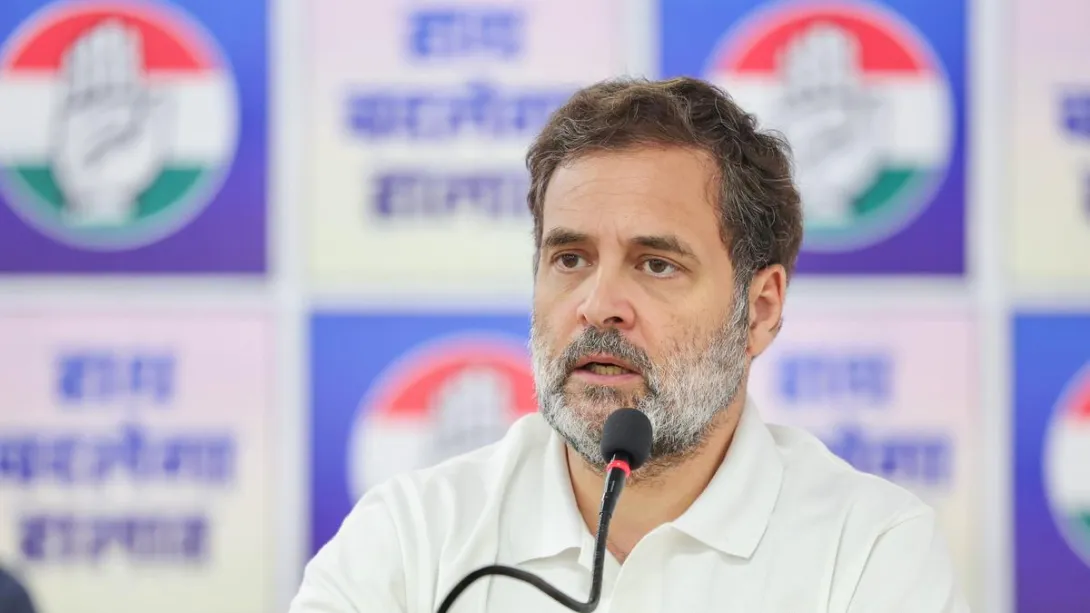
Rahul Gandhi, leader of the Congress party and Opposition in the Lok Sabha, responded forcefully to the incident, sharply criticizing the ruling BJP and Chief Minister Nitish Kumar. In a social media statement, Gandhi accused the government of allowing Bihar to devolve into a “crime capital,” asserting that rampant violence and lawlessness have become normalized under their watch.
“The brazen murder of businessman Gopal Khemka has once again proved the BJP and Nitish Kumar together have turned Bihar into India’s crime capital,” Gandhi declared in Hindi. He called for urgent change, emphasizing that the state’s citizens no longer feel safe and that the government’s inability to protect its people renders it unfit to govern.
Gandhi’s remarks underscored the political stakes, positioning the tragedy as a catalyst for electoral change. He framed the upcoming vote as a referendum not only on governance but on the fundamental safety and future of Bihar’s residents.
Law Enforcement Response: Investigations and Ongoing Challenges
More than 36 hours after the murder, authorities have yet to apprehend the perpetrators or make significant progress in the case. Patna Senior Superintendent of Police, Kartikey Sharma, formed Special Task Force (STF) and Special Investigation Team (SIT) units that conducted extensive raids overnight from Saturday to Sunday, detaining multiple suspects for questioning.
Police sources disclosed that the shooter’s last known location was traced to Vaishali district, and preliminary investigations indicate a possible motive linked to a land dispute. Intriguingly, the case also has connections to Ajay Varma, a notorious criminal currently incarcerated at Beur Jail in Patna. In response, authorities executed a raid at the jail to interrogate Varma regarding the murder.
The ongoing inquiry, while active, has yet to yield conclusive evidence or suspects, fueling public anxiety and political criticism about the state’s capacity to ensure justice swiftly and effectively.
Broader Implications: Governance, Security, and Public Confidence
This incident starkly illustrates the fragility of law and order in Bihar, a state grappling with complex social, economic, and political challenges. The delayed police response and absence of swift breakthroughs have shaken public confidence in the state’s governance machinery. Furthermore, the murder of a prominent businessman spotlights the risks faced by entrepreneurs in an environment where crime and political entanglements intersect.
Political analysts note that this event could galvanize opposition parties and intensify scrutiny on the Nitish Kumar administration ahead of forthcoming elections. The state government now faces mounting pressure to demonstrate competence in crime control and public safety to regain trust and stabilize the political climate.
Conclusion: A Call for Accountability and Reform
The killing of Gopal Khemka serves as a grim reminder of the persistent security challenges in Bihar. It underscores the urgent need for comprehensive reforms in policing, judicial processes, and governance frameworks to restore law and order. Political leaders and law enforcement agencies alike must rise to the occasion to ensure that such brazen acts of violence become aberrations rather than recurring tragedies.
As Bihar stands at a crossroads, this high-profile murder and its aftermath may well determine the trajectory of its political landscape and the safety perceptions of its citizenry for years to come.
Comments