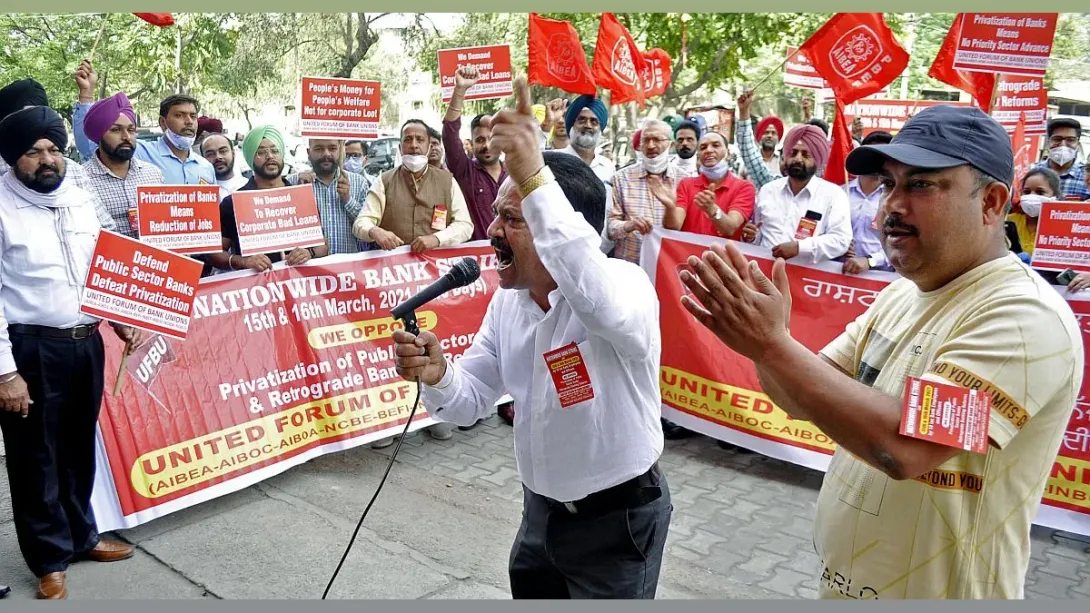
Banking operations across Madhya Pradesh were severely disrupted following a large-scale strike by bank employees, affecting nearly 7,000 branches statewide. The protest, called by banking unions, led to the suspension of key services, including cash withdrawals, cheque clearances, and branch-based customer assistance. While digital banking platforms remained largely operational, the strike caused inconvenience to individuals, small businesses, and traders dependent on physical banking channels. Union leaders cited unresolved demands related to wages, staffing levels, and job security. The disruption highlights ongoing tensions between bank management and employee unions, raising concerns over service continuity and customer confidence in the banking system.
Widespread Disruption Across the State
Banking services in Madhya Pradesh came to a standstill as employees across public and select private sector banks participated in a coordinated strike. Nearly 7,000 branches remained either fully closed or operated with minimal staff, resulting in long queues at functional branches and ATMs. Customers faced difficulties accessing essential services such as cash deposits, withdrawals, loan processing, and document verification.
Key Services Affected
The strike led to the suspension of branch-level operations, including cheque clearing, account-related queries, and in-person transactions. Small businesses and daily wage earners were among the most impacted, particularly in semi-urban and rural areas where reliance on physical bank branches remains high. While online banking, mobile apps, and ATM networks continued to function, intermittent cash shortages at select ATMs were reported due to limited replenishment.
Union Demands and Industry Concerns
Bank employee unions stated that the strike was organized to press for long-pending demands, including revisions in wage structures, improved working conditions, and adequate staffing to manage increasing workloads. Union representatives argued that prolonged understaffing and operational pressure have strained employees and compromised service quality. Banking authorities, meanwhile, emphasized the need for dialogue to resolve disputes while ensuring minimal disruption to customers.
Economic and Customer Impact
Economists note that even short-term banking disruptions can affect local commerce, particularly in cash-dependent sectors. Delays in payments and settlements may have a cascading effect on small enterprises and traders. Repeated service interruptions also risk eroding customer trust, prompting banks to accelerate investments in digital infrastructure and alternative service channels.
Outlook and Resolution
While the strike was temporary, analysts caution that recurring labor unrest could pose operational risks for the banking sector. Stakeholders are urging timely negotiations between unions and bank management to prevent further disruptions. A sustainable resolution, experts say, will be essential to maintaining service continuity, employee morale, and public confidence in the financial system.
Comments