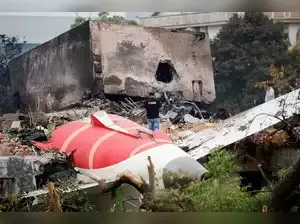
The tragic crash of an Air India Boeing 787 in Ahmedabad on June 12, which claimed 241 lives, has sparked a complex web of international legal and financial consequences. Legal experts in the UK have emphasized that Air India and Boeing may both face unlimited liability under international aviation conventions if proven negligent. While Air India holds $1.5 billion in insurance coverage, compensations—especially when involving multiple nationalities and varying jurisdictions—could substantially exceed this cap. As investigations begin, affected families may pursue damages globally, navigating a labyrinth of tort law, insurance frameworks, and evolving airline accountability.
The Montreal Convention and Its Implications
At the heart of the compensation framework is the Montreal Convention, a treaty that prescribes liability standards for international air travel. According to the convention, airlines are presumed liable for injuries or fatalities and must compensate victims' families with a minimum of 151,800 Special Drawing Rights (SDRs)—an International Monetary Fund-defined currency basket.
With one SDR currently valued at approximately Rs. 120, this equates to a base payout of around Rs. 1.82 crore per victim. This amount is mandatory and does not require the families to prove fault. However, if negligence is established, claimants can seek compensation far beyond this prescribed limit.
Air India’s Insurance Shield and Its Limits
Air India is currently backed by a $1.5 billion (approx. Rs. 12,500 crore) liability insurance policy, reinsured through the London market. Industry insiders believe this coverage is generally adequate even in catastrophic scenarios. However, legal experts caution that the final payout could breach this ceiling if courts in jurisdictions such as the UK or US award damages based on higher income expectations or punitive standards.
In past instances, such as the 2010 Mangalore crash, families received compensation that exceeded base conventions—one family alone received Rs. 7.6 crore. Given the scale of the Ahmedabad disaster and its international casualty list, similar outcomes are expected.
Nationality, Income, and Jurisdiction: The Variables That Matter
The flight had a diverse passenger list: 181 Indians, 53 British nationals, 7 Portuguese citizens, and 1 Canadian. Each of these jurisdictions permits varying approaches to calculating damages. UK courts, for example, typically include future lost income, personal circumstances, and emotional suffering in compensation assessments.
Moreover, victims' families may choose to file lawsuits in their home countries, thereby invoking local tort laws. Under UK tort law, once negligence is proven through evidence and court proceedings, the resulting awards can significantly exceed limits set by international conventions.
The Boeing Factor: Shared or Separate Liability?
Apart from Air India, Boeing could also face unlimited liability, particularly if mechanical failure or design flaws with the Boeing 787 are discovered. Aviation attorney James Healy-Pratt of the UK-based Keystone Law notes that courts in both the United States and the United Kingdom have the authority to impose such damages.
Healy-Pratt’s firm, alongside Chicago-based Wisner Law, has launched an independent investigation into the incident. The latter has a history of representing clients in aviation disasters, including the 2020 Air India Express crash. If Boeing is implicated, claims could dramatically escalate.
Investigations and Settlements: A Protracted Legal Landscape
Legal and financial proceedings following air disasters typically extend over months or even years. According to senior industry executives, compensation is usually distributed in tranches—starting with the SDR-mandated base compensation, followed by negotiated settlements or litigation-determined awards.
Insurance and legal specialists indicate that while the current policy should withstand immediate claims, multiple large-scale incidents in a single year could strain resources. Additionally, third-party liabilities—such as damage to residential properties where the aircraft crashed—further complicate the financial exposure for Air India.
The Human Toll and the Search for Accountability
While financial compensation offers a path to justice, experts and families alike emphasize that no monetary value can equate to the loss of life. Legal representatives are preparing to seek comprehensive and fair compensation packages, especially for families whose primary earners were among the victims.
Healy-Pratt stated, “No amount of money can ever compensate families who have lost loved ones, but our international team will be seeking the fullest compensation from all potentially responsible parties.”
Conclusion: A Test Case for Airline Liability in the Modern Era
The Ahmedabad crash has become more than a national tragedy—it is a pivotal case for re-evaluating accountability and compensation in global aviation. As legal teams across continents prepare for a protracted battle, the case could set significant precedents for how liability is assessed and enforced when international treaties, multinational corporations, and sovereign jurisdictions intersect.
For Air India and Boeing, the financial and reputational stakes are monumental. For grieving families, the pursuit of justice has just begun.
Comments