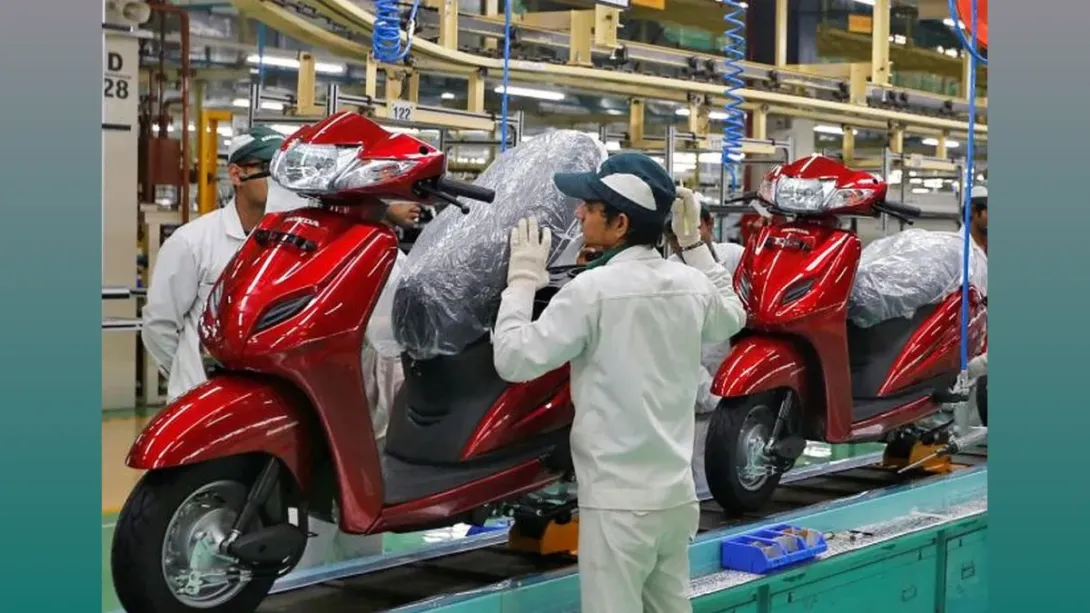
Honda Motorcycle & Scooter India (HMSI) has laid out an ambitious growth strategy with the objective of capturing a 30% share of India’s two-wheeler market by 2030. With an emphasis on product expansion, electric vehicle (EV) innovation, and deeper rural penetration, the Japanese automaker seeks to reinforce its long-term commitment to the Indian mobility landscape. Currently holding a significant portion of the scooter market, Honda now intends to broaden its presence in motorcycles and the electric mobility space, capitalizing on India's surging demand for sustainable and affordable two-wheeled transportation.
Strategic Vision: 2030 Market Share Goal
Honda's 30% market share target represents a bold pivot from incremental growth to aggressive expansion. The strategy signals a recalibration of the company’s roadmap, positioning India not only as a critical market for volumes but also as a hub for innovation, exports, and electrification.
By 2030, Honda intends to elevate its brand from a dominant player in urban scooters to a comprehensive mobility provider across all categories—including entry-level motorcycles, premium models, and electric vehicles.
Expanding Product Portfolio and EV Ambitions
A central pillar of Honda’s strategy is product diversification. Recognizing that a one-size-fits-all approach no longer suffices in India’s dynamic mobility sector, the company plans to launch several new internal combustion engine (ICE) models and a series of electric two-wheelers tailored to various customer segments.
Honda has already confirmed plans to roll out electric scooters by 2025, with the intention of developing a robust local supply chain for batteries and components. A dedicated EV vertical and charging infrastructure network are also in the works, underscoring the company’s commitment to sustainable mobility.
Rural Reach and Tier-II, Tier-III Focus
In addition to consolidating its urban presence, Honda is actively deepening its reach into semi-urban and rural markets. These regions, which represent a large share of two-wheeler consumption, are critical to the company’s long-term goals.
To achieve this, Honda will expand its dealership network, improve service accessibility, and introduce affordable models that meet the practical needs of rural customers—without compromising on reliability or fuel efficiency.
This regional strategy is aimed not only at boosting volumes but also at creating lasting brand loyalty in price-sensitive, high-growth areas.
Production Capacity and Export Push
To support its expansion plans, Honda is ramping up production capabilities across its manufacturing facilities in India. It is also evaluating new export markets, particularly in Asia, Africa, and Latin America, where Indian-made two-wheelers can serve as a competitive alternative in value-driven markets.
The company’s increasing integration of India into its global supply chain is expected to strengthen its cost advantages and economies of scale, contributing to both domestic and overseas performance.
Competitive Landscape and Industry Challenges
Honda’s growth aspirations come at a time of heightened competition in the Indian two-wheeler space. Established rivals are doubling down on electrification, and several new entrants are leveraging digital platforms and direct-to-consumer models to disrupt traditional retail channels.
Additionally, evolving regulatory norms around emissions, safety, and EV compliance will require sustained investments in R&D and compliance.
However, Honda’s global brand equity, proven manufacturing prowess, and dealer network position it well to navigate these complexities and build on its legacy.
Conclusion: Accelerating Toward a Future-Ready Market Position
Honda's target of capturing 30% of India's two-wheeler market by 2030 underscores its long-term commitment to the country’s mobility evolution. By aligning its strategy with emerging consumer preferences, embracing electrification, and strengthening rural outreach, the company is positioning itself not just as a leader in units sold—but as a key architect of India’s transport transformation. Whether the company achieves its ambitious share will depend on execution, market shifts, and its ability to stay ahead of both legacy and disruptive players in an ever-evolving landscape.
Comments