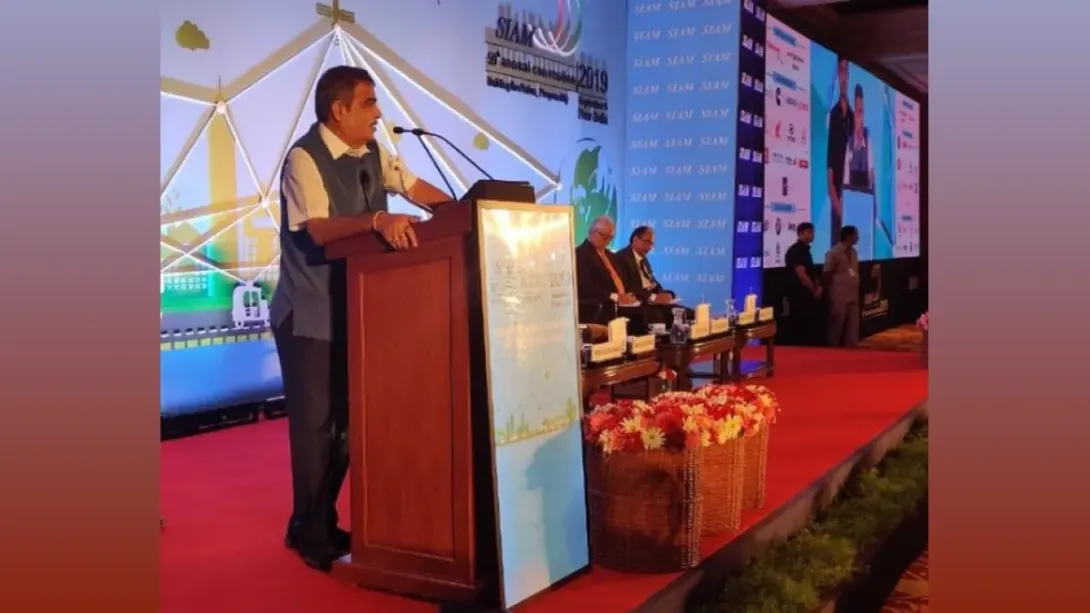
Union Minister Nitin Gadkari has underscored that mitigating vehicular emissions stands as the government’s foremost environmental commitment. Speaking at a recent industry conclave, Gadkari reaffirmed India’s drive toward cleaner transportation through aggressive electrification, adoption of alternative fuels, and stringent emission standards. This strategic pivot aims not only to combat worsening air quality but also to fortify energy security by reducing reliance on imported fossil fuels. As India navigates its ambitious net-zero roadmap, these initiatives are expected to recalibrate the automotive landscape, compelling both manufacturers and consumers to accelerate the shift toward sustainable mobility solutions.
Prioritizing Cleaner Air Through Transport Reforms
Addressing a gathering of industry stakeholders, Union Road Transport and Highways Minister Nitin Gadkari reiterated that reducing vehicular pollution remains the government's highest environmental priority. Highlighting the alarming rise in air pollution across major urban centers, Gadkari stressed the urgent need to transform India’s transportation ecosystem. The minister pointed out that vehicles account for a substantial portion of particulate matter and greenhouse gas emissions, necessitating immediate interventions.
He asserted that the government is determined to align policy frameworks to curb pollution levels, safeguard public health, and support India’s broader climate commitments under the Paris Agreement.
Transition to Green Mobility: Multi-Fuel Strategy
Gadkari elaborated on a multi-pronged strategy designed to decarbonize India’s transport sector. A key element involves ramping up the deployment of electric vehicles (EVs) by extending incentives under the Faster Adoption and Manufacturing of Electric Vehicles (FAME) scheme, along with expanding the nation’s EV charging infrastructure.
Simultaneously, he advocated for greater adoption of alternative fuels such as ethanol, compressed natural gas (CNG), liquefied natural gas (LNG), and even green hydrogen. These initiatives are intended to diversify India’s energy mix, mitigate crude oil imports, and lower the transportation sector’s carbon footprint.
The minister also highlighted recent regulatory moves, including tightening Bharat Stage (BS) emission norms, to compel automakers to innovate cleaner engine technologies.
Economic and Strategic Implications
Beyond environmental concerns, Gadkari emphasized the significant economic rationale underpinning these efforts. India annually spends over Rs. 16 lakh crore on crude oil imports, a figure that exerts immense pressure on the country’s trade balance. By accelerating the adoption of domestically produced biofuels and electric mobility, India stands to substantially cut this expenditure.
Moreover, fostering local manufacturing of EV components and alternative fuel technologies is expected to generate new employment opportunities and stimulate ancillary industries, contributing to India’s ‘Atmanirbhar Bharat’ vision.
Building Public and Private Consensus
Gadkari called upon automobile manufacturers, fuel producers, and technology innovators to play a proactive role in this transition. He underscored the necessity for a robust collaborative model wherein the government sets ambitious targets while the private sector delivers practical solutions, from battery advancements to cleaner combustion systems.
Equally critical is creating consumer awareness and trust. The minister noted that widespread adoption hinges on ensuring affordability, reliability, and adequate refueling or charging infrastructure, without which India’s green mobility mission could falter.
Outlook: Steering Toward a Sustainable Future
As India moves steadily toward its net-zero ambitions by 2070, the transport sector’s transformation is non-negotiable. Gadkari’s renewed emphasis on combating vehicular emissions serves as both a policy directive and a clarion call to industry players and citizens alike. While challenges related to technology readiness, cost economics, and behavioral shifts remain, the trajectory is clear: India’s roads of the future must be cleaner, greener, and far less dependent on fossil fuels.
Comments