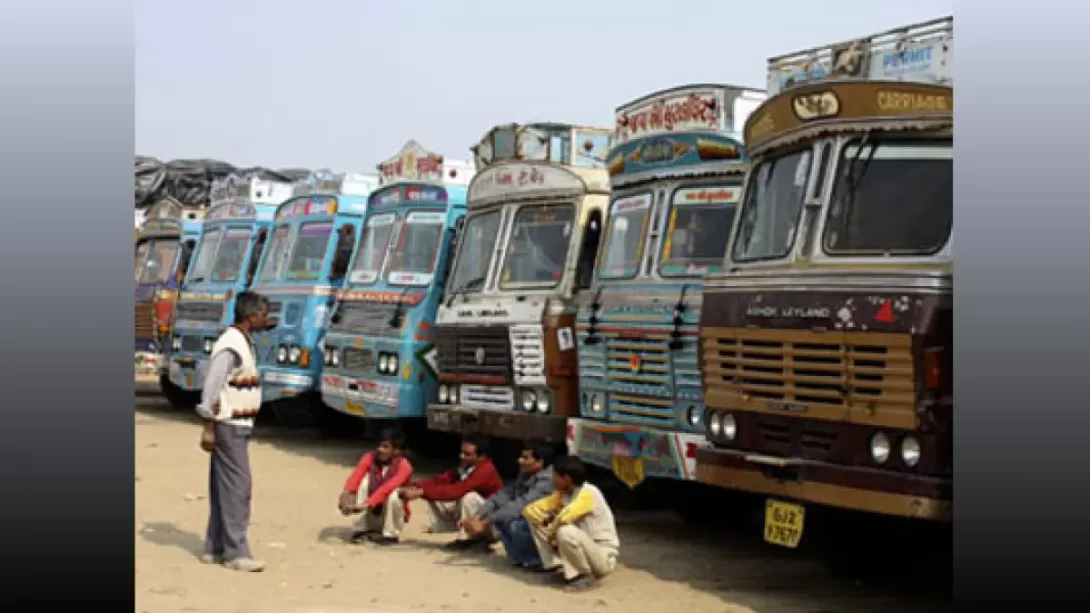
India’s freight and logistics sector maintained stable momentum in April, with truck rentals largely flat on most key trade corridors despite a 5–10% rise in toll charges across several routes. A seasonal surge in goods movement, particularly summer produce, helped cushion the impact of rising operational costs. While certain routes experienced marginal fluctuations—such as a 2.5% rise on the Delhi–Chennai axis and a 1.6% dip on the Delhi–Bengaluru stretch—the broader market remained steady. Meanwhile, rural demand drove robust growth in two-wheeler and bus sales, although commercial vehicle volumes took a hit amid tepid infrastructure spending.
Freight Rates Stabilize as Summer Movement Offsets Cost Pressures
April witnessed truck rentals holding firm across most long-haul trade routes, indicating a market equilibrium shaped by counterbalancing forces. While operators grappled with a 5–10% increase in toll charges—a direct hit to margins—the seasonal uptick in freight demand, driven by the movement of summer fruits and perishable goods, provided partial relief.
According to industry data, the Delhi–Chennai–Delhi corridor saw a sequential uptick of 2.5%, signaling robust southbound cargo flows. In contrast, the Delhi–Bengaluru–Delhi route dipped 1.6%, suggesting route-specific moderation, potentially linked to regional demand variations or fleet reallocation.
Overall, freight operators managed to absorb the cost increase without significantly altering tariffs, suggesting cautious optimism rooted in volume stability.
Year-on-Year Growth Shows Momentum in Select Corridors
While monthly data revealed marginal movement, annual comparisons painted a stronger picture. Truck rentals rose 14% year-over-year on the Kolkata–Guwahati–Kolkata corridor—indicative of rising demand in the northeast logistics chain, often linked to improved road infrastructure and greater market integration in the region.
Similarly, the Mumbai–Chennai–Mumbai route reported an 8% year-on-year increase in freight rates, highlighting the steady flow of industrial and FMCG goods between western and southern hubs. These figures underline structural demand resilience and the broader normalization of supply chains that were previously disrupted by the pandemic or geopolitical trade bottlenecks.
Mixed Signals in Auto Segment Reflect Uneven Recovery
In parallel to freight market trends, April’s vehicle sales data delivered a mixed set of indicators across segments. Two-wheeler sales rose 12% month-on-month, driven by buoyant rural consumption and improved road connectivity. Buses also saw a 4% rise, extending the demand surge witnessed in March—a month that had already set an all-time high for the category.
One of the standout performers was the electric rickshaw segment, particularly models equipped with carts, which posted an astounding 77% year-on-year growth. This figure underscores the rising penetration of electric mobility in last-mile delivery ecosystems, fueled by both policy incentives and urban demand for cost-efficient transport.
However, the commercial vehicle space experienced pressure. Tractors, often viewed as a proxy for rural infrastructure and agricultural investment, declined 13% month-on-month. Analysts attribute this dip to sluggish capital expenditure in public works, which has delayed demand for haulage and utility-focused vehicles.
E-Way Bill Activity Points to Active Trade Networks
Amid mixed signals in vehicle sales, e-way bill data offered a more bullish outlook. March saw strong growth in electronic waybill generation, reflecting high formal sector activity and goods mobility. Intra-state e-way bills increased 12% month-on-month, while inter-state volumes rose 11%, reinforcing the notion of a busy logistics landscape, especially as the financial year drew to a close.
These trends suggest that despite microeconomic headwinds—such as cost pressures, fuel volatility, and policy inertia—India’s domestic logistics ecosystem remains active and adaptive, thanks to decentralized demand and expanding rural connectivity.
Conclusion: A Market Balancing Cost with Capacity
April’s freight data underscores a market delicately balancing rising input costs with consistent, if regionally varied, demand. Truck rentals held stable due to countervailing forces: operational expenses climbed, but volume strength in perishables and intra-regional trade helped soften the blow.
As vehicle sales data show divergent trends across categories—from EVs to commercial tractors—it’s clear that the Indian logistics and mobility ecosystem is in a state of transition. With infrastructure spending expected to pick up post-election, and the monsoon season on the horizon, the next few months will test the sector’s flexibility and resilience.
Comments