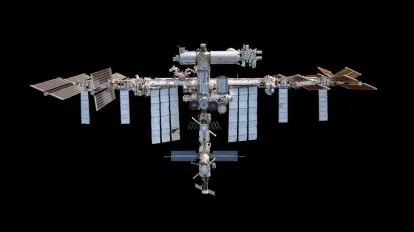
After more than two decades of continuous operation, the International Space Station (ISS)—a symbol of global cooperation and scientific progress—is nearing the end of its remarkable journey. NASA has confirmed that the ISS will be retired within the coming years, marking a pivotal transition in the history of human spaceflight. As the orbiting laboratory prepares for decommissioning, the agency is redirecting its focus toward commercially operated space stations, designed to continue research, technological development, and international collaboration in low-Earth orbit.
The shift represents not just the end of a mission, but the beginning of a new space economy, one driven by innovation, private investment, and sustainable exploration strategies.
Why NASA is Retiring the ISS
Launched in 1998, the ISS has served as a microgravity laboratory and an international hub for scientific research involving astronauts from 20 nations. However, after over 25 years in orbit, the station’s aging structure has begun showing signs of wear. Frequent maintenance challenges, microfractures, and rising operational costs—estimated at Rs. 30,000 crore annually—have made its long-term sustainability increasingly difficult.
NASA and its global partners, including Roscosmos, ESA, JAXA, and CSA, have agreed that by the end of this decade, the ISS will complete its final mission cycle. The agency plans to deorbit the station safely into the South Pacific Ocean, ensuring minimal environmental impact.
In NASA’s own strategic vision, retiring the ISS is not a retreat from low-Earth orbit—it’s a transition toward modernization and cost efficiency, paving the way for the next phase of orbital infrastructure.
The Future: Commercial Space Stations to Take Over
To maintain a continuous human presence in space, NASA has already begun partnering with private companies to develop a new generation of commercial space habitats. Firms such as Axiom Space, Blue Origin, and Voyager Space are leading initiatives to design modular, cost-effective, and multifunctional space stations that can host both research missions and private astronauts.
Unlike the ISS, which relied on intergovernmental funding, these upcoming orbital platforms will operate on public–private partnerships, where NASA acts as an anchor customer. This strategy allows the agency to reduce expenses while fostering a competitive commercial ecosystem in low-Earth orbit.
The goal is to have the first privately managed space stations operational before 2030, ensuring there is no lapse in human presence in orbit once the ISS retires.
Economic and Strategic Implications
NASA’s shift toward commercialization signals a fundamental evolution in space policy—from government-dominated operations to market-driven innovation. The global space economy, currently valued at over Rs. 40 lakh crore, is projected to expand significantly as private players enter the field.
Commercial stations will not only support scientific research but also enable manufacturing, biotechnology, and tourism in microgravity. This transition could position the United States as a leader in space-based economic development while opening doors for international collaboration and private sector growth.
Analysts suggest that this move aligns with NASA’s broader ambitions for deep-space exploration, including its Artemis program aimed at establishing a sustained human presence on the Moon and, eventually, Mars. By outsourcing near-Earth operations, NASA can redirect more resources toward these long-term missions.
What Happens to the ISS After Decommissioning?
When the ISS reaches the end of its operational life, NASA plans a controlled deorbit maneuver. The spacecraft will descend gradually into Earth’s atmosphere, where most of it will burn up upon re-entry. Remaining debris will be directed to a remote area of the South Pacific known as the “spacecraft cemetery.”
Before this occurs, valuable research equipment and modules may be transferred to new commercial stations or repurposed for training and testing. The agency is working closely with international partners to ensure that data continuity and research access are maintained during the transition.
A Legacy That Redefined Space Exploration
The ISS has hosted over 270 astronauts and conducted 3,000+ research experiments across biology, physics, astronomy, and Earth science. It stands as a testament to what nations can achieve when working together beyond geopolitical boundaries.
Its legacy extends far beyond science—it has shaped policies, inspired generations, and laid the foundation for international cooperation in space. The upcoming shift toward privatized space infrastructure does not erase that legacy—it builds upon it, transforming space from a government-led frontier into an open domain for innovation and enterprise.
Conclusion: A New Orbit Awaits
As the ISS prepares to close its chapter in history, NASA’s next steps are poised to define the future of human spaceflight. The transition from a state-run station to commercial platforms symbolizes both technological maturity and economic evolution.
In many ways, the retirement of the ISS mirrors the dawn of a new era—one in which space becomes not only a destination for exploration but a thriving hub for commerce, research, and collaboration. Humanity’s next great leap will not be led by a single agency, but by a constellation of innovators extending our reach beyond the stars.
Comments