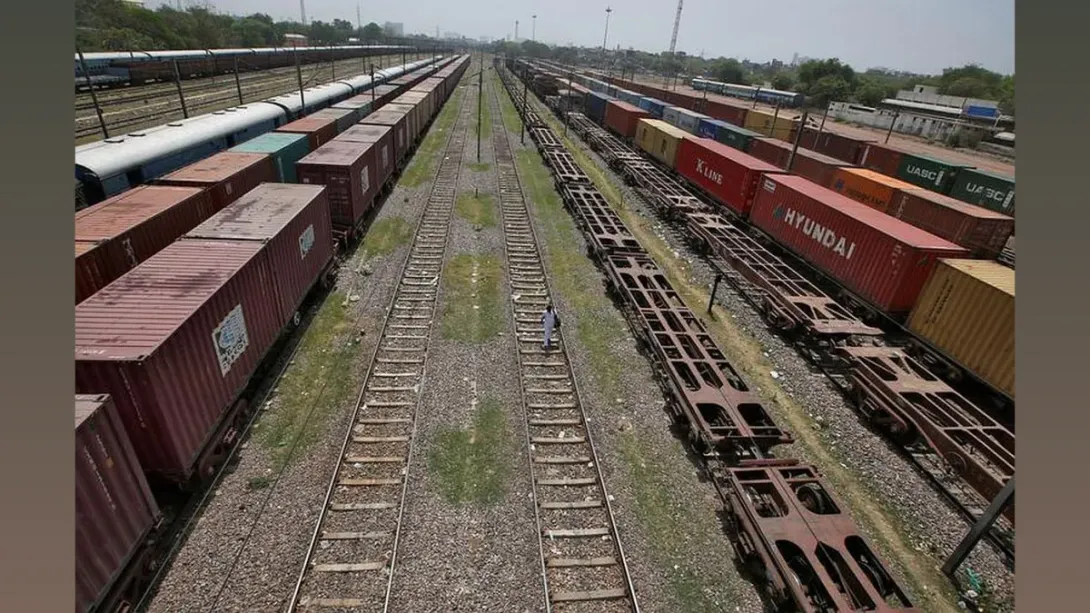
The Dedicated Freight Corridor Corporation of India Ltd. (DFCCIL) has recorded an impressive 48% increase in freight train operations, underscoring the growing efficiency and capacity of India’s dedicated freight network. The surge reflects the corporation’s ongoing efforts to modernize rail logistics and decongest traditional passenger routes, enhancing the overall speed and reliability of goods movement. With more trains operating across its eastern and western corridors, DFCCIL continues to play a pivotal role in reshaping India’s freight transportation ecosystem, reducing logistics costs, and supporting the government’s long-term vision of transforming the nation into a global trade and manufacturing hub.
Freight Traffic Sees Record Expansion
DFCCIL’s freight operations have witnessed a sharp 48% rise, driven by higher utilization of its eastern and western dedicated freight corridors (DFCs). The company has significantly scaled up the number of trains running daily, enabling faster transit of key commodities such as coal, cement, steel, fertilizer, and containerized goods.
This growth highlights the increasing preference of industries and logistics operators for DFC routes, which offer enhanced carrying capacity, better turnaround times, and reduced congestion compared with the conventional rail network. The corridors’ ability to handle longer and heavier freight trains has also boosted efficiency, contributing to reduced per-tonne transportation costs.
Eastern and Western Corridors Driving Growth
The Eastern Dedicated Freight Corridor (EDFC) and Western Dedicated Freight Corridor (WDFC) are the primary contributors to DFCCIL’s operational surge. The EDFC primarily caters to power plants and heavy industries in northern and eastern India, while the WDFC serves high-value container traffic connecting ports in Gujarat and Maharashtra with inland terminals in Haryana, Rajasthan, and Uttar Pradesh.
The expansion of these corridors has enabled faster goods movement between ports and industrial hubs, significantly improving logistics performance. With both corridors nearing full operationalization, the total volume of freight transported through DFCCIL is projected to grow substantially in the coming quarters.
Boost to India’s Logistics Efficiency
The surge in train operations underlines India’s broader shift toward rail-based freight movement as a sustainable and cost-effective logistics solution. By diverting bulk cargo from roadways to railways, DFCCIL is helping reduce fuel consumption, lower emissions, and enhance multimodal connectivity.
According to logistics analysts, DFCCIL’s improved performance could reduce logistics costs by up to 20% over time—critical for industries such as manufacturing, energy, and construction that rely heavily on efficient supply chains. Moreover, faster turnaround of rolling stock is expected to improve asset utilization across the Indian Railways network.
Infrastructure Expansion and Future Plans
DFCCIL’s performance surge comes amid accelerated construction and commissioning of the remaining corridor sections. The corporation is targeting completion of the entire 2,843-km network in the near term, with advanced technologies such as automated train control, electronic interlocking, and predictive maintenance being deployed to enhance safety and operational reliability.
Future plans also include the development of multimodal logistics parks, last-mile rail connectivity for major industrial clusters, and potential integration with the upcoming high-speed freight systems. These initiatives aim to transform DFCCIL into a cornerstone of India’s logistics revolution under the National Rail Plan and the Gati Shakti initiative.
A Catalyst for Economic Competitiveness
The 48% rise in train operations is not merely a statistical achievement—it reflects a strategic shift in India’s approach to freight management. As the nation aspires to become a global manufacturing and export hub, efficient rail logistics will be key to enhancing competitiveness, reducing turnaround times, and supporting sustainable growth.
DFCCIL’s progress signals a maturing logistics ecosystem that blends infrastructure efficiency with digital innovation. As the corridors reach full capacity and integrate with industrial corridors and ports, India’s freight movement landscape is poised for a transformative leap, reinforcing the country’s position as a global supply chain leader.
Comments