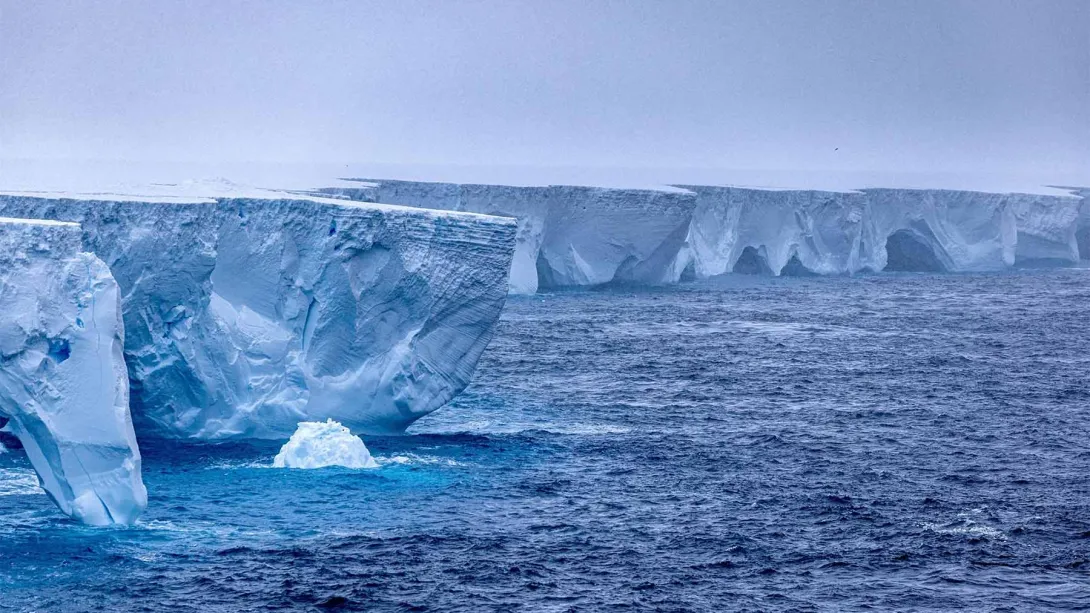
A23a, one of the world’s oldest and largest icebergs, has entered an advanced phase of melting after drifting into the comparatively warmer waters of the South Atlantic Ocean. Formed more than 40 years ago, the massive iceberg has long remained largely intact in colder polar regions. Scientists say its accelerated breakup highlights the growing influence of rising ocean temperatures and shifting currents linked to climate change. While the melt poses no immediate threat to coastal populations, researchers view A23a as a critical indicator of broader changes unfolding across the Antarctic ice system and the global climate.
A Giant Iceberg at a Turning Point
A23a originally calved from Antarctica in the mid-1980s and remained grounded for decades, effectively frozen in place. Its recent movement into the South Atlantic marks a significant change in its life cycle, exposing it to warmer waters that hasten structural weakening.
Satellite imagery shows increasing fragmentation, a sign that the iceberg is entering its final phase.
Why the South Atlantic Matters
The South Atlantic Ocean is considerably warmer than the frigid waters where A23a spent most of its existence. As the iceberg drifts northward, heat exchange between the ocean and the ice accelerates melting from below, while wave action erodes its surface.
Oceanographers note that such transitions often trigger rapid disintegration, even for ice masses that have remained stable for decades.
Climate Signals Beneath the Surface
Although individual icebergs melt naturally over time, scientists emphasize that A23a’s timing and trajectory align with broader climate trends. Rising sea temperatures and altered wind patterns are increasingly influencing the movement and longevity of Antarctic ice.
From a research perspective, A23a offers a real-world case study to refine models of ice-ocean interaction under warming conditions.
Environmental and Economic Implications
As large icebergs melt, they release vast quantities of freshwater into the ocean, potentially affecting local marine ecosystems and nutrient distribution. While A23a’s melt is unlikely to directly raise sea levels—since it was already floating—it contributes indirectly to understanding how land-based ice loss could reshape coastlines and global economies.
Shipping routes and fisheries also monitor such developments closely due to navigational and ecological considerations.
What Scientists Are Watching Next
Researchers are continuing to track A23a using satellites and ocean sensors to measure melt rates, fragmentation patterns, and environmental impact. Data collected from this process will inform climate projections and policy discussions.
The gradual disappearance of a 40-year-old iceberg serves as a stark reminder that even the most enduring ice formations are increasingly vulnerable in a warming world.
Comments