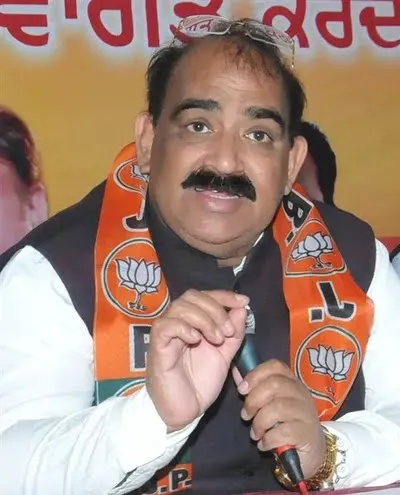
The Bharatiya Janata Party (BJP) has formally announced that it will contest the 2027 Punjab Assembly elections without entering alliances, marking a significant shift in its political strategy for the state. State party president Ashwani Sharma stated that the BJP is prepared to field candidates on all seats, emphasizing organizational growth, increased grassroots engagement, and a vision to establish the party as a strong standalone force. The decision signals the BJP’s intention to reshape the political landscape of Punjab by expanding its outreach among farmers, youth, traders, and urban voters while positioning itself as an independent alternative in a traditionally multi-coalition environment.
BJP Sets the Stage for a Solo Fight in 2027
Declaring a decisive political course for the next assembly elections, BJP state president Ashwani Sharma affirmed that the party will contest all seats independently. This announcement marks the party’s transition from earlier coalition-based strategies toward building a self-reliant electoral framework in Punjab.
Sharma stated that the BJP’s internal assessments reveal a strengthened organization and an expanding support base capable of sustaining a solo campaign. The leadership believes that ground-level changes in voter sentiment and the party’s organizational discipline place it in a strong position for the 2027 race.
Emphasis on Expanding Grassroots Engagement
Central to the BJP’s solo strategy is a renewed focus on grassroots expansion. Party leaders have intensified district-level outreach programs, village interactions, and direct engagement with local communities.
Sharma highlighted that the party is investing in strengthening booth committees, mobilizing youth workers, and connecting with farmer groups and small business owners. The leadership is confident that deeper engagement with these communities will translate into a more widespread and stable political presence across urban and rural constituencies.
Broadening Voter Outreach Across Key Segments
The BJP aims to widen its influence among diverse voter groups, including traders, entrepreneurs, professionals, and first-time voters. Sharma pointed out that the party is working to present policy alternatives centered on economic development, employment opportunities, and improved governance.
The leadership also emphasized improved law and order, industrial growth, and infrastructure development as core themes that will shape the party’s campaign. By positioning itself as a credible and stable alternative, the BJP hopes to attract voters seeking new leadership models in Punjab.
Rewriting Punjab’s Political Equation
For decades, Punjab’s politics has been shaped by alliances and shifting partnerships. The BJP’s decision to go solo is likely to alter traditional equations, forcing other parties to rethink their strategies. Political analysts believe that this move signals the BJP’s long-term ambition to emerge as a major pillar of the state’s political landscape rather than relying on coalition dynamics.
Sharma indicated that the party’s growing strength in urban areas and increasing visibility in rural belts provide a foundation for contesting across all constituencies—something the BJP has not done independently in previous elections.
Strategic Consolidation Ahead of the Campaign
Looking ahead, the party plans to intensify statewide campaigns, launch policy-driven outreach programs, and strengthen communication channels between leadership and voters. Sharma reiterated that the BJP’s preparations are not just electoral but structural, aimed at building a long-term political footprint in Punjab.
The coming months will witness large-scale organizational activities, training programs for workers, and constituency-level assessments as the party gears up for a competitive electoral battle.
Comments