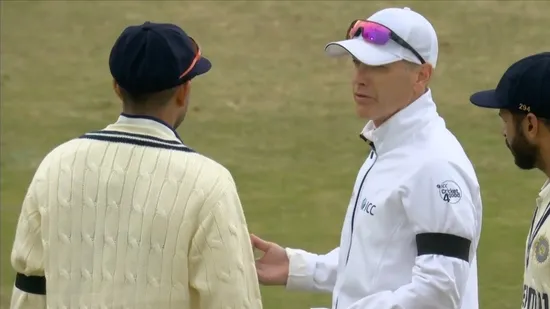
As the Headingley Test between India and England approached its climactic final day, tensions soared both on and off the field. With England chasing a formidable 371-run target, India’s bowlers found themselves battling not just batters but also umpiring decisions over ball changes. Mohammed Siraj, KL Rahul, and Shubman Gill repeatedly requested a new ball, only to be denied until the 27th over. Frustration spilled over, resulting in a formal reprimand for Rishabh Pant after he expressed dissent during the first innings. Despite the off-field distractions, Pant and Rahul’s centuries had earlier set up a thrilling finish, keeping all results within reach.
Ball Change Drama Dominates Early Sessions
The final day of the first Test between India and England at Headingley promised high-octane cricket—and it delivered, albeit with unexpected controversies. India, holding the upper hand after centuries from KL Rahul and Rishabh Pant in the second innings, set England a daunting 371-run target. But early on Day 5, the focus shifted from the bat and ball to the officials.
England openers Zak Crawley and Ben Duckett blunted the new ball effectively, denying India early breakthroughs and frustrating the visiting side’s bowlers. Mohammed Siraj made the first of several ball change requests in the 14th over, claiming the condition of the ball had deteriorated. However, the ball repeatedly passed the “ring test”—a standard used to assess its shape—and umpires Paul Reiffel and Chris Gaffaney declined the appeal.
Mounting Frustration on the Field
The denied requests began to visibly affect India’s on-field demeanor. Shubman Gill, KL Rahul, and Siraj engaged with the umpires multiple times over the course of a few overs. Even Shardul Thakur joined the chorus, prompting boos from the Headingley crowd each time a request was denied and cheers when the ball was deemed fit for play.
The umpires finally relented before the start of the 27th over, granting a ball change. However, the incident highlighted growing tensions and the psychological battles that accompany high-stakes Test cricket.
This was not an isolated incident. During the first innings as well, India had raised similar concerns, only to see their appeals repeatedly turned down. The umpiring decisions became a sub-plot that further intensified the already competitive atmosphere of the Test.
Rishabh Pant Reprimanded for Dissent
Adding to India’s woes, wicketkeeper-batter Rishabh Pant was reprimanded by the International Cricket Council (ICC) for showing dissent during England’s first innings. The flashpoint came during the 61st over when, after another unsuccessful ball change appeal, Pant demonstratively threw the ball on the ground near the umpires.
Pant, who had been one of India’s standout performers with twin centuries in the match, accepted the charge and received an official reprimand along with one demerit point. No financial penalty was imposed, and the matter did not proceed to a formal hearing as Pant accepted the sanction issued by Richie Richardson, a member of the ICC Elite Panel of Match Referees.
Test Match in the Balance
Despite the distractions, the cricket itself remained fiercely competitive. England closed Day 4 at 21 without loss, needing 350 more runs with all ten wickets intact. India’s bowlers, who had been dominant for much of the match, were tasked with prising out ten wickets on a flat pitch under pressure.
The Test, the first in a five-match series, was already shaping up to be a contest for the ages. Pant’s twin tons and Rahul’s composed hundred had given India a strong position, but the resilience of England’s top order kept the hosts in the hunt.
The Broader Implications
While ball change debates are not uncommon in Test cricket, the intensity with which the issue unfolded at Headingley underscores the high-pressure environment that surrounds elite international fixtures. The crowd reactions, the players’ emotional investment, and the umpiring challenges all form a microcosm of Test cricket's timeless charm and evolving tensions.
For Pant, the reprimand may serve as a reminder of the fine line between passion and dissent. For India, the incident is likely to strengthen their resolve, adding a psychological edge to future encounters in this fiercely contested series.
Conclusion
With emotions running high and the contest finely poised, the Headingley Test has already delivered a compelling narrative both on the scorecard and in player conduct. Whether India can convert their upper hand into victory or England can script a historic chase remains uncertain. But what is evident is that this Test—marred by ball-change disputes and buoyed by individual brilliance—has reignited the spirit of traditional cricketing rivalry at its finest.
Comments