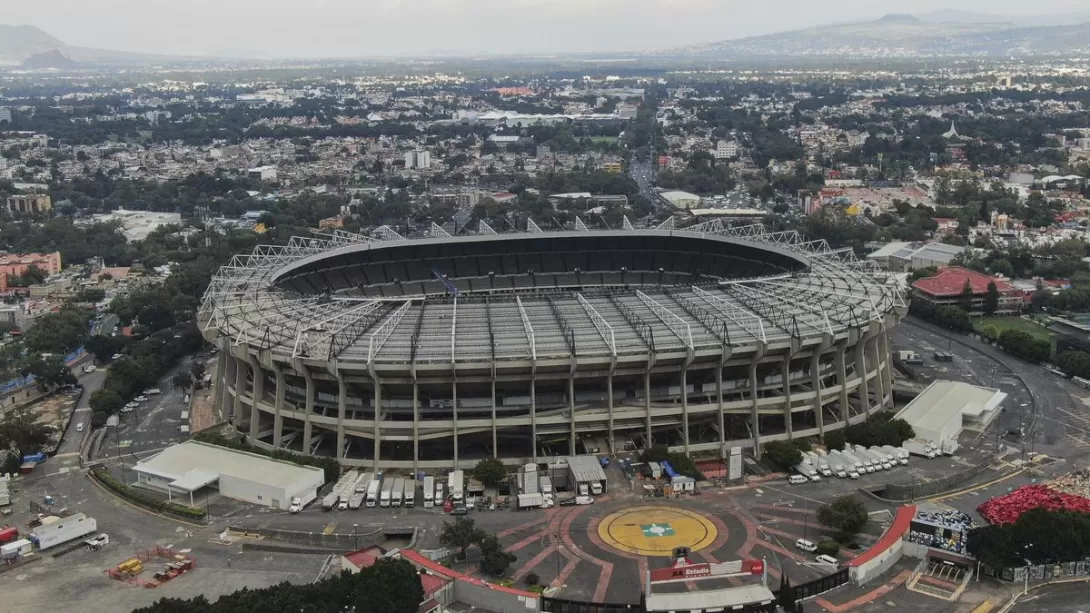
As Mexico City gears up to co-host the 2026 FIFA World Cup, the iconic Estadio Azteca is undergoing a comprehensive modernization to meet the demands of the expanded 48-team tournament. Scheduled to reopen on March 26, just 75 days before the opening match, the stadium's renovations focus on enhancing accessibility, comfort, and sustainability. From a hybrid turf system to new locker rooms, hospitality zones, elevators, and digital upgrades, the redesign underscores a broader push to align with global standards. The stadium, which will host five World Cup matches—including the opener—will also see increased capacity and improved infrastructure across all levels.
A New Era for a Football Icon
Estadio Azteca, one of the most storied venues in international football, is receiving a transformative upgrade ahead of the 2026 FIFA World Cup. Known for hosting the historic 1970 and 1986 World Cups, the stadium is now poised to welcome a new generation of fans and athletes. Owned by Ollamani, a sports and entertainment firm affiliated with Grupo Televisa, the project aims to modernize both the functional and experiential aspects of the venue.
According to Ollamani and Mexico City officials, the upgraded Azteca will reopen on March 26, 2026, precisely 75 days before the global tournament kicks off.
Infrastructure Overhaul: More Than Cosmetic Changes
Central to the renovation is a reimagined visitor experience. The revamped stadium will now include:
- Hybrid Field Technology: A new hybrid grass system will be installed, supported by a modern ventilation and suction system to ensure durability and rapid recovery. This marks the stadium’s second attempt at a hybrid surface, following a failed 2018 installation that led to the cancellation of an NFL game due to poor pitch conditions.
- Relocated Locker Rooms: Athletes will now enjoy upgraded facilities positioned directly under the luxury boxes with a direct tunnel to the field, improving logistics and pre-match coordination. Previously, locker rooms were located at opposite ends of the stadium.
- Modern Fan Amenities: Renovations include updated hospitality zones, expanded concessions, and improved seating arrangements. While specifics on seat count were not disclosed, Ollamani confirmed the capacity will increase beyond the current 83,000 seats.
Accessibility and Digital Enhancements
The remodel also prioritizes accessibility, an area previously criticized for lacking basic modern conveniences. Though Ollamani has yet to disclose precise details on new elevators or escalators, their inclusion marks a shift from the venue's previous reliance on steep ramps for vertical movement.
Additional upgrades include:
- LED Screens: State-of-the-art LED panels will be added both inside and outside the stadium, significantly improving visual communications. Prior to renovations, the Azteca featured only two screens, both installed in 2015.
- Media and Broadcast Facilities: The stadium's press and media infrastructure is being reconfigured to align with international standards, making it more adaptable for high-demand global coverage.
Strategic Timing and Global Spotlight
The timing of the reopening is critical. With FIFA and its broadcast partners expected to conduct thorough pre-event testing, the March 26 relaunch allows for operational readiness and fine-tuning. Given the Azteca’s role in hosting five matches, including the tournament opener, the pressure to deliver a world-class facility is considerable.
Mexico City Mayor Clara Brugada emphasized the importance of the stadium’s role in bolstering the city’s international reputation, while stadium director Felix Aguirre stated, “The centerpiece of this renovation is the people who visit. Our goal is to improve their experience in every way.”
Legacy and Outlook
As the only venue to have hosted two World Cup opening matches—and soon a third—Estadio Azteca carries immense historical and symbolic weight. With these extensive renovations, the stadium not only preserves its legacy but repositions itself as a cutting-edge venue capable of competing with the newest stadiums in North America and Europe.
The 2026 World Cup, jointly hosted by Mexico, the United States, and Canada, represents an unprecedented logistical and sporting collaboration. For Mexico, the revamped Estadio Azteca is both a cultural milestone and a statement of readiness.
Conclusion
From engineering upgrades to hospitality enhancements, the overhaul of Estadio Azteca signals a turning point in Mexico’s sporting infrastructure. As global attention converges on North America in 2026, the stadium will once again stand as a monumental stage—not only for the world’s most-watched sporting event, but also for the enduring power of football to evolve with time while honoring its past.
Comments