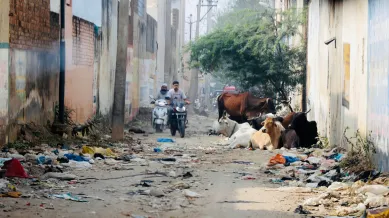
Malerkotla, Punjab’s youngest and smallest district, finds itself in an administrative limbo nearly four years after its formation. Despite being carved out with the vision of efficient governance and local empowerment, the district today is grappling with severe infrastructure deficiencies. The Deputy Commissioner (DC) and Senior Superintendent of Police (SSP) — the two most crucial administrative heads — reportedly remain without permanent offices or official residences. This absence of basic administrative infrastructure has raised serious questions about governance, planning, and the state’s ability to deliver on promises of decentralized efficiency.
---
A District Born of Political Symbolism, Struggling for Administrative Stability
Malerkotla was announced as a separate district in 2021, a decision celebrated widely for its symbolic and political significance. It was Punjab’s first Muslim-majority district, carved out of Sangrur to acknowledge the region’s rich cultural heritage and administrative potential.
However, the lofty promise of improved governance has since collided with ground realities. While the announcement was made amid much fanfare, the subsequent planning and resource allocation appear to have lagged behind. Nearly four years later, the district lacks permanent administrative buildings, and key officers are functioning from makeshift facilities — a situation that has turned symbolic celebration into practical stagnation.
The absence of government quarters has left top officers “homeless” in bureaucratic terms, forcing them to operate from temporary locations. As a result, both internal coordination and public service delivery have suffered, with residents expressing frustration over delays and inefficiencies.
---
Makeshift Governance: How Administration Operates Without Infrastructure
The administrative vacuum in Malerkotla has led to an unusual working model. The Deputy Commissioner’s office functions out of a temporary setup with limited facilities, while the SSP’s office operates from borrowed space, severely restricting the district’s ability to respond to law-and-order challenges efficiently.
Basic administrative functions such as issuing licenses, land registrations, and managing social welfare schemes face chronic delays due to logistical hurdles. Without a centralized administrative complex, interdepartmental coordination has weakened, and the district’s identity as an independent administrative unit remains largely symbolic.
For citizens, the impact is tangible. Complaints regarding delayed services, paperwork mismanagement, and inconsistent public contact programs have grown frequent. Local traders and residents have called for immediate government intervention to restore administrative order and provide the infrastructure necessary for effective governance.
---
Political Promises and the Cost of Unfulfilled Commitments
The case of Malerkotla underscores a recurring challenge in Indian statecraft — the political haste to create new districts without corresponding attention to foundational infrastructure. While new districts often emerge as gestures of political goodwill, their success depends on sustained administrative investment, budgetary support, and logistical planning.
In Malerkotla’s case, the absence of follow-through planning has rendered the district’s creation largely ceremonial. The state government’s assurances of developing permanent buildings for administration, judiciary, and police remain pending. Meanwhile, bureaucrats rotate between temporary accommodations and borrowed spaces, unable to function effectively in the absence of adequate resources.
Observers argue that this pattern reflects a broader issue of governance decentralization being pursued more for political optics than for structural reform. District creation, when inadequately supported, risks undermining the very efficiency it seeks to achieve.
---
The Human Cost: Officers and Citizens in Administrative Limbo
Beyond bureaucratic inconvenience, the lack of infrastructure has a human dimension. Officers transferred to Malerkotla face logistical and personal challenges, with limited accommodation options and inadequate official housing. This has reportedly discouraged experienced officers from seeking postings in the district, leading to frequent transfers and instability in leadership.
For citizens, the impact manifests in slow service delivery and declining trust in public administration. A resident of the district commented that “the promise of progress has turned into a waiting game,” encapsulating the growing frustration among locals who expected better accessibility and efficiency after the district’s creation.
Meanwhile, essential departments — including health, education, and revenue — continue to function from dispersed locations, creating confusion and inefficiency in service coordination.
---
The Road Ahead: Restoring Order and Accountability
Experts believe that the state government must prioritize the completion of permanent infrastructure in Malerkotla if the district is to fulfill its founding purpose. Allocating a defined budget, fast-tracking land acquisition, and setting a fixed timeline for administrative complex construction are seen as immediate imperatives.
Additionally, the government must focus on institutional stability by ensuring continuity in administrative leadership. A stable bureaucratic framework, coupled with modern digital governance tools, could help Malerkotla transition from symbolic existence to functional efficiency.
The district’s unique cultural and demographic identity also presents opportunities for pilot initiatives in community governance, minority welfare programs, and urban-rural integration — provided the administrative foundation is made strong and sustainable.
---
A Lesson in Governance Execution
Malerkotla’s ongoing administrative paralysis serves as a reminder that governance is not achieved through declarations but through sustained execution. The district’s plight highlights the gap between political intent and bureaucratic infrastructure — a gap that must be bridged if Punjab aims to strengthen its decentralized governance model.
As officers work from temporary offices and citizens wait for reliable services, Malerkotla stands as a case study in how administrative vision, without structural support, risks collapsing under its own symbolism. The hope remains that decisive state action can transform this fledgling district from a cautionary tale into a model of rural governance revival.
Comments