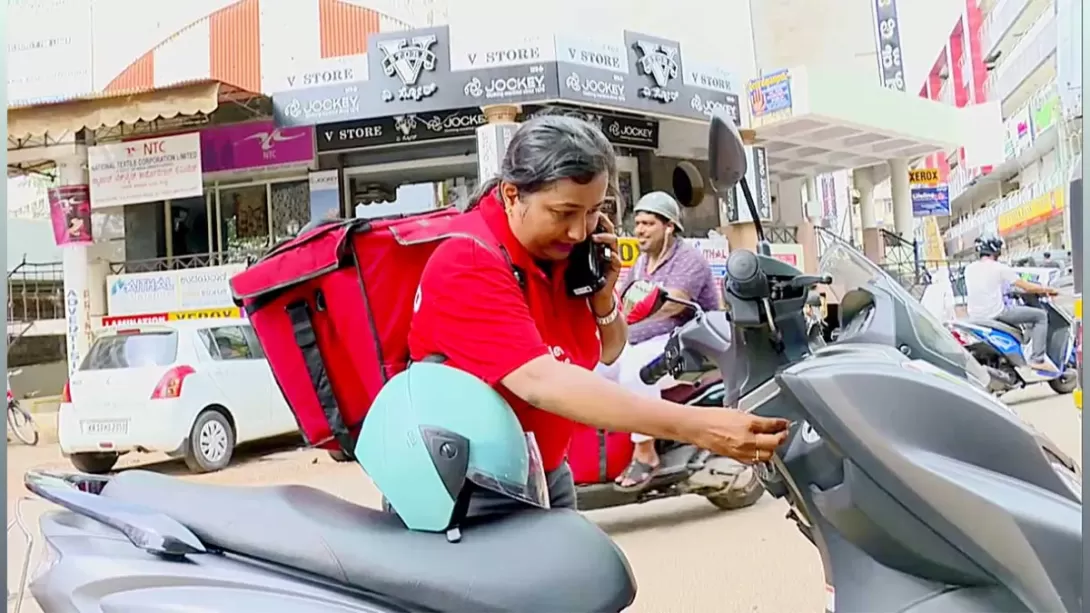
Swiggy’s ultra-fast delivery service, 'Bolt', has seen rapid expansion since its launch in October last year, now operational in over 500 cities across India. With at least 10% of all Swiggy orders currently being fulfilled via this 10-minute delivery model, the company is positioning 'Bolt' as a cornerstone of its growth strategy. This development contrasts sharply with rival Zomato—recently rebranded as Eternal—which has shuttered its own quick commerce initiative citing unviable economics. Swiggy’s success with Bolt reflects evolving consumer preferences for immediacy and convenience, while signaling a broader strategic pivot toward scalable, time-sensitive food logistics.
Swiggy’s Bold Bet on Bolt
In the fast-evolving world of food logistics, speed is emerging as the ultimate differentiator. Swiggy, one of India’s top food delivery platforms, has fully embraced this paradigm through its ultra-rapid delivery vertical, Bolt. Launched just months ago, Bolt already accounts for at least 10% of all deliveries made on the platform—an impressive uptake for a service promising meals in just 10 minutes.
What began as a pilot is now a national-scale operation. The Bolt service has expanded to over 500 cities, a clear indication of Swiggy's aggressive scaling capabilities and logistical sophistication.
Why Bolt Works: Strategy Rooted in Urban Consumption Patterns
Swiggy’s leadership maintains that Bolt is built for modern lifestyles characterized by instant gratification. Rohit Kapoor, CEO of Swiggy Food Marketplace, explained that the service is tailored for customers who want food "now"—without sacrificing quality or reliability.
To achieve this, Bolt zeroes in on hyperlocal delivery mechanics. The platform only partners with restaurants located within a 2-kilometer radius of the customer and prioritizes dishes with minimal preparation times. This approach ensures orders can be executed quickly and predictably, without compromising food quality or customer satisfaction.
The model leverages Swiggy’s existing delivery fleet and platform intelligence, optimizing for speed through advanced routing algorithms and localized supply chain efficiency.
Contrast with Zomato’s Retreat from Quick Commerce
Swiggy’s announcement comes on the heels of a notable strategic retreat by rival Zomato—now rebranded as Eternal—from its own rapid-delivery experiment, Zomato Quick. Citing unsustainable unit economics and infrastructure challenges, the company publicly acknowledged that India’s current restaurant density and kitchen infrastructure are insufficient for consistently delivering meals in 10 minutes without affecting user experience.
Zomato’s decision underscores the operational difficulty of balancing scale, speed, and profitability in quick commerce. In contrast, Swiggy’s Bolt appears to have struck a viable middle ground by focusing on hyperlocal logistics and product selection designed for speed.
This divergence marks a strategic inflection point in the Indian food tech space, where Swiggy is betting on immediacy as a lasting consumer trend, while its main competitor is retreating from that segment—at least for now.
Operational Discipline and Technological Leverage
Bolt’s success is not just about speed—it's about execution at scale. Swiggy’s robust data infrastructure enables precise demand prediction, kitchen-level optimization, and dynamic fleet management. The company’s years of investment in AI and supply chain analytics are paying dividends, allowing it to meet rapid delivery promises without degrading overall service performance.
The ability to deploy such services across a fragmented market like India—where city infrastructure varies drastically—is a testament to Swiggy’s operational maturity. By deploying Bolt in smaller tier-2 and tier-3 cities, Swiggy is demonstrating that instant delivery is not just a metro-centric phenomenon but a scalable national proposition.
Investor Interest and Market Implications
With Swiggy eyeing a public listing in the near future, Bolt's growth trajectory is likely to feature prominently in its investor narrative. Instant delivery aligns with the broader consumer tech trend of hyper-convenience and may offer differentiated margins, especially when optimized at scale.
Furthermore, as Swiggy diversifies into other verticals such as grocery and home essentials, the Bolt infrastructure could become a multi-use logistics asset, opening doors to cross-category monetization.
For the broader food delivery sector, Bolt’s rise reinforces the need for companies to deeply integrate logistics with product curation and geographic strategy—an area where Swiggy currently appears to have the upper hand.
Conclusion: Speed Meets Strategy in Swiggy’s Bolt Play
Swiggy’s Bolt is more than a gimmick—it's a calculated move that aligns technological capability with evolving consumer behavior. While its rival takes a cautious step back from ultra-fast food delivery, Swiggy is doubling down, scaling aggressively, and leveraging data and operations to create a defensible moat.
Whether this model sustains long-term profitability remains to be seen, but for now, Swiggy has made its intentions clear: in the battle for India’s digital dining table, speed wins.999999
Comments