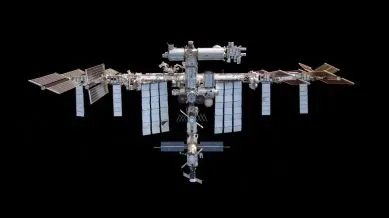
In a groundbreaking study, scientists have confirmed that moss spores can remain viable after nearly a year of exposure to the harsh conditions of outer space. The experiment subjected these resilient spores to extreme vacuum, cosmic radiation, and temperature fluctuations aboard a space platform, testing the limits of life in extraterrestrial environments. Researchers found that a significant proportion of spores retained their ability to germinate, suggesting remarkable adaptability. These findings provide valuable implications for astrobiology, the possibility of life beyond Earth, and future long-duration space missions where understanding biological resilience is critical for sustaining life.
---
Moss Spores Endure the Harshness of Space
A team of international researchers has demonstrated that moss spores, a hardy form of plant life, can survive extended exposure to the extreme conditions of outer space. The study placed spores in orbit, exposing them to vacuum conditions, intense ultraviolet and cosmic radiation, and drastic temperature swings—elements that typically prove lethal to most terrestrial organisms. Upon return, scientists observed that many spores remained viable, capable of germination, highlighting an extraordinary resilience that challenges previous assumptions about the vulnerability of life in space.
Implications for Astrobiology and Life Beyond Earth
The survival of moss spores in outer space offers a unique perspective for astrobiology, the study of potential life on other planets. If such resilient organisms can endure the vacuum and radiation of space, it expands the theoretical possibilities for life on planets or moons with extreme environmental conditions, such as Mars or Europa. This resilience also strengthens hypotheses regarding panspermia—the idea that life can transfer between celestial bodies via spores or microbial life carried by meteoroids.
Future Space Missions and Biological Research
Understanding the durability of moss spores has direct applications for long-duration space missions and extraterrestrial colonization. For instance, scientists and space agencies can explore using hardy plant spores to develop life support systems, contribute to regenerative ecosystems, or even produce oxygen in confined habitats. Moreover, these findings pave the way for further studies on how biological systems respond to prolonged exposure to space conditions, informing the design of experiments to test other resilient organisms.
Insights into Evolution and Adaptation
Moss spores’ survival in space underscores the evolutionary adaptations that allow life to endure extreme environments. The ability to resist radiation, survive desiccation, and tolerate temperature extremes demonstrates a form of biological robustness that could inform bioengineering, synthetic biology, and conservation strategies. Such research not only deepens our understanding of life's potential beyond Earth but also enhances knowledge about survival mechanisms in extreme terrestrial environments.
---
The confirmation that moss spores remain viable after nearly a year in space represents a remarkable milestone in space biology, opening avenues for astrobiology, space exploration, and understanding the boundaries of life itself. By showcasing nature’s resilience, these tiny spores could inspire innovative strategies for sustaining life during humanity’s ventures beyond our home planet.
Comments